Nawroz, Climbing & War: Perspectives of a Kurdish Climber
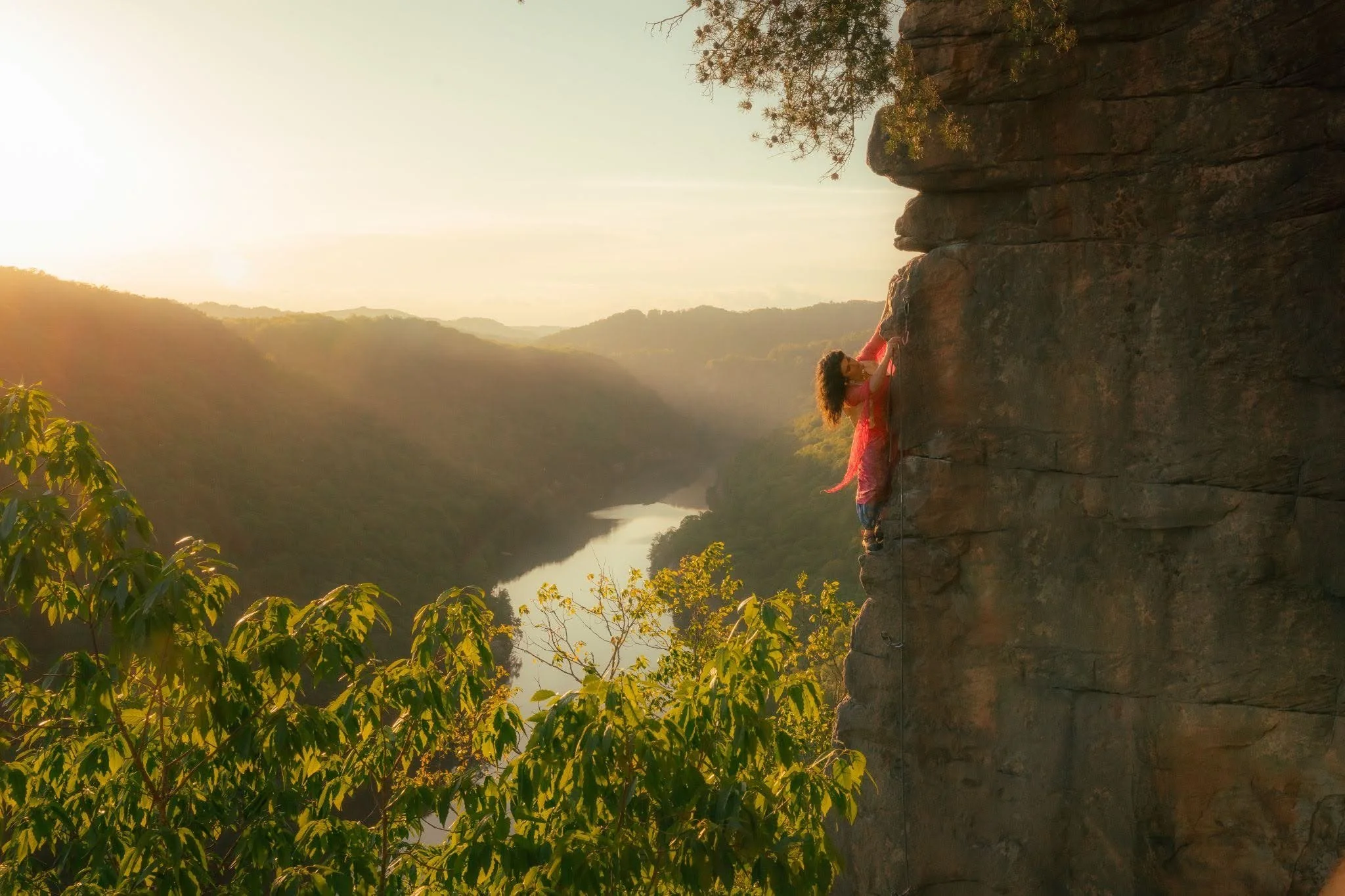
Photo of the author Zhelia climbing in Kurdish clothes at the New River Gorge, her home crag for many years / Photo by Alex Myers
In 2021, I became the first female Kurdish sport climber in Bashur, Kurdistan (Northern Iraq). Everything I climbed was a first female ascent. This at first felt exciting! But with time, I realized it was a testament to the hardship Kurds have faced over the years.
We Kurds primarily live in the Zagros Mountains of Upper Mesopotamia. Our history dates back 2000+ years, originating as a nomadic tribal mountain people. Many empires have come and gone, and our people have stayed in these mountains. Even our most famous Kurdish proverb today is “no friends but the mountains.” Yet somehow we’ve only recently had rock climbers in the last 6 years. It begs the question: if we, as a people, have such a deep history as mountaineers, why did it take so long for us to start rock climbing?
Well, the Kurdish people today are 40 million strong, but we are primarily split between 4 countries: Iran, Iraq, Syria, & Turkey. After World War I, the Allied Powers reorganized West Asia & North Africa into mostly British and French-occupied states. In this, they abandoned the plan for an independent Kurdistan and left us as the largest ethnic group in the world without a country. This threw us Kurds into a century of external manipulation by European and American powers and internal repression from the states we reside in.
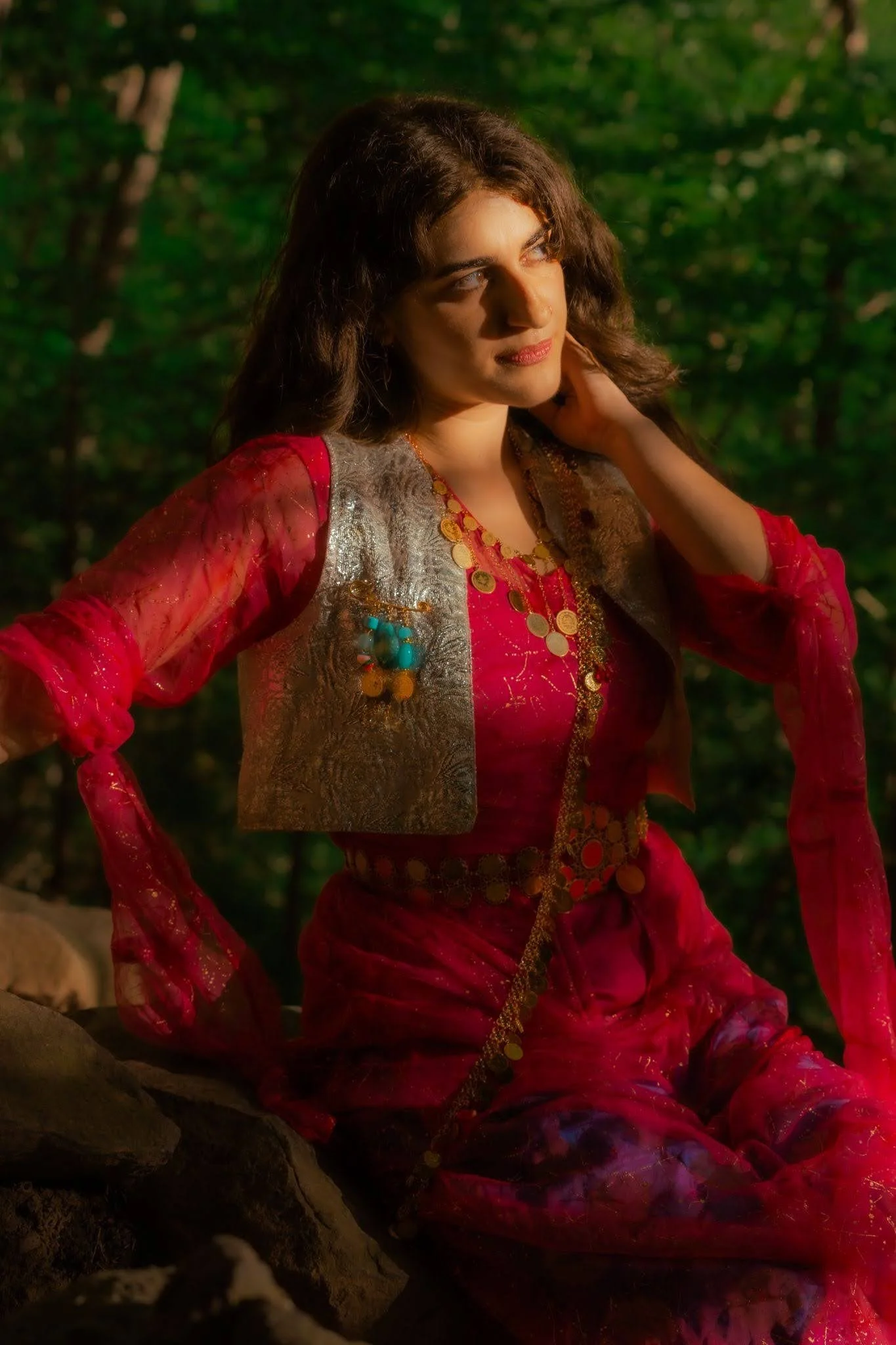
Author Zhelia in traditional Kurdish clothes / Photo by Alex Myers
In 1998, this was the world I was born into. I lived in Erbil, the capital of Bashur, where I was raised until 2007, when my family moved to the U.S. for the American Dream. As a kid from Iraq entering 5th grade in the aftermath of 9/11 & the 2003 U.S. invasion, I began a decade of survival. When I first discovered climbing in 2018, I was studying 2 majors, working 2 jobs, and pursuing a career as a physician. Climbing began as a random aside, but immediately became a core relief from the stress of my immigrant existence. It was a way to calm my mind, heal my body, and feel powerful despite my circumstances. At 20, I had never before pursued something so deeply that wasn’t directly tied to my material survival. See, I come from a world that has just begun to breathe. Becoming the first female sport climber in my homeland, just 5 years ago, was a testament to this. To be Kurdish is to survive; to be born in Iraq is to survive. Along the road of trying to make it to tomorrow, many of us forgot how to find joy in today. Climbing felt like a way to reclaim this joy.
So I became determined to share this with my people, especially our women. Over the past 5 years, I’ve taught climbing in Kurdistan, supported the development of our female climbers, and fundraised to equip our first climbing gym with 3 suitcases of gear. After 19 years of visiting on trips, I was finally moving home to Kurdistan this summer to continue this work.
But for climbers like myself, climbing can never truly be an escape. Our lives are so intricately tied to social, political, & economic changes that our climbing is affected no matter what we do. My plans all changed 2 months ago, when western imperialism once again intervened in my region, chasing control of our resources. Governments & schools in Bashur have been shut down or functioning minimally, so now I can’t transfer to finish school in Kurdistan this year.
I do not have the privilege of running into the woods, ignoring world events, & simply enjoying climbing because when I call my grandma to tell her about my day, bombs are falling around her. I love hearing the voices of my loved ones, but avoiding talk of the current horrors and trying not to sound too happy doesn't leave much to discuss. Not even the weather is an option. I’d love to tell them yesterday was a beautiful spring day: wildflowers everywhere, birds chirping, the air bursting with hope. But then I remember where they are, drones drown out the bird chirps, and missiles dull the hope of Spring. By the end of the first week of the war, I had been sleeping 5 hours max a night, waking up drenched in sweat with jaw pain from grinding my teeth, and eating 800 calories max a day. It was one of those moments when the absurdity of climbing hits me the hardest: how silly am I to focus on a game in the midst of all this pain? Don’t I know we have bigger problems to worry about?
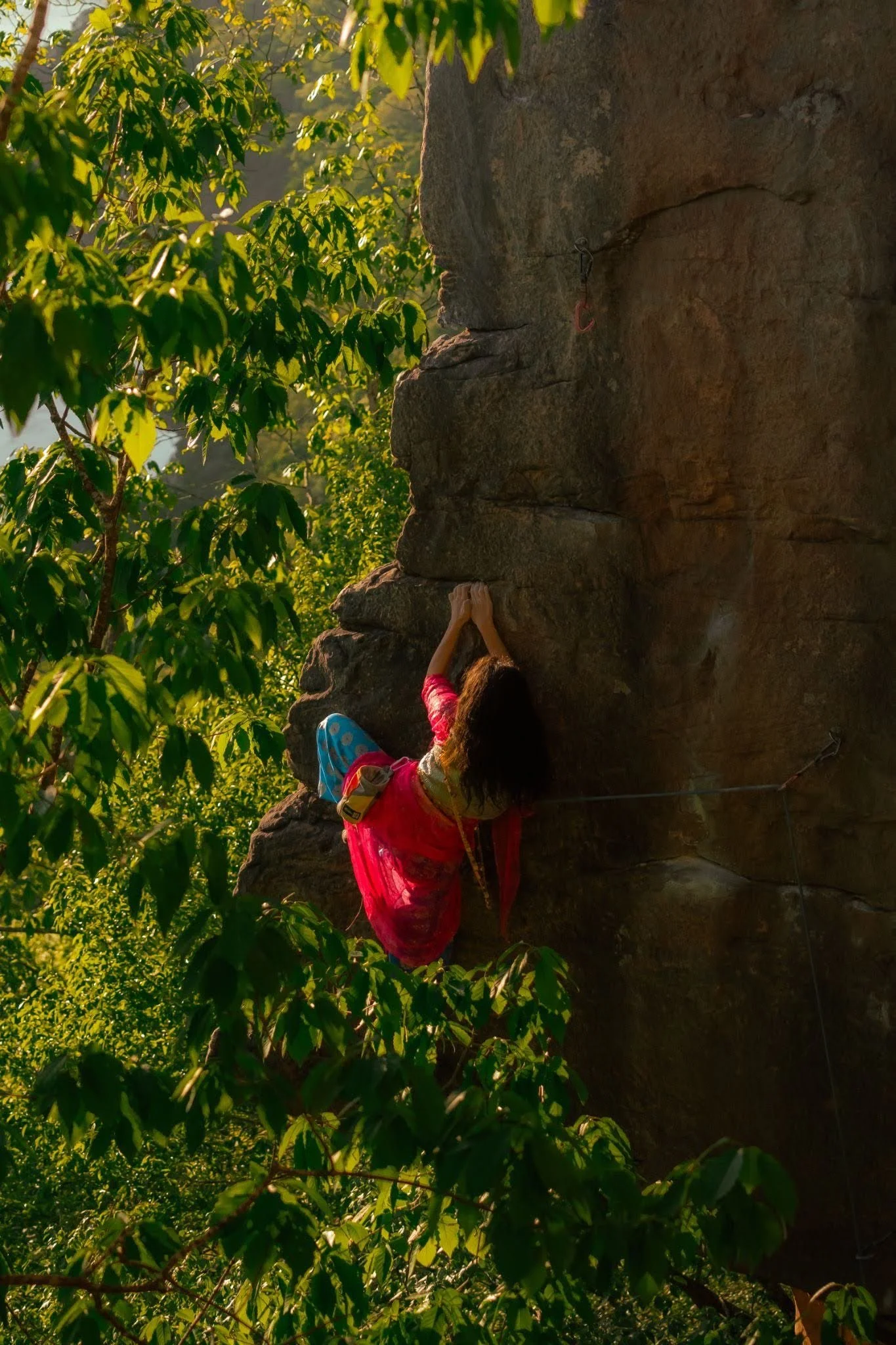
Zhelia on a section of The Decameron that’s definitely not 5.10b, but only because she’s 5’2 (in classic NRG style) /Photo by Alex Myers
But that Friday, despite being malnourished, I went climbing with a friend. I got on a 5.9+ trad climb, and as a sport climber recently turned trad gumby, I was fighting tooth and nail to get to the top. Not only was I learning how to jam, but the crack was also soaked at the crux. I was screaming and grunting, resting and falling—it all felt impossible! But somehow, I got to the top—and I felt ECSTATIC! After a week of stress for my loved ones and my future in my homeland, here I was grinning ear to ear and screaming with power.
“So, in those minutes after I finish, all I feel is the joy and pride of existence.”
It reminded me that play is not absurd, and I’m not silly for climbing in this situation. Because for those minutes I am on the wall, nothing else needs to exist. So, in those minutes after I finish, all I feel is the joy and pride of existence. Immediately, I again have the strength to fight for a better world. Immediately, I am again determined to develop climbing in Kurdistan. We deserve more than a life of survival. We deserve to play, we deserve to climb, and we deserve to live life for the sake of its pleasures.
Despite the novelty of rock climbing as a source of light in Kurdistan, the perseverance of joy and goodness in the face of tyranny is not new for us Kurds. The age-old theme is the core tenet of our biggest celebration as a people: Nawroz.
Every year, Kurds celebrate our new year, Nawroz, on the Spring Equinox, along with many of our neighbors. The Kurdish Nawroz folklore begins in a castle atop the Zagros mountains, where a series of kind and just kings rule the surrounding towns and villages. They care for their people, share resources, and celebrate the Sun Gods, the source of all goodness and happiness. That is all until the reign of King Jemshid arrives. Jemshid is a man with a narcissistic ego who sees himself as more powerful than the Sun Gods. In this moment of weakness, the spirit Ahriman the Evil sees an opportunity to control the kingdom. For his vessel, he chooses Zahak, a man with a thirst for power and a weakness in morals. Once Zahak takes the throne, Ahriman curses him, making a snake grow from each of his shoulders. These snakes cause Zahak immense pain and can only be calmed if they eat two kids' brains a day.
Thus begins a ritual: every day, two kids are chosen from the towns and villages and killed for the king’s snakes. Angered by the betrayal, the Sun Gods abandon them, and darkness overtakes the land. Crops wither, animals leave, and trees disappear. The people enter a deep, deep sadness, but are too terrified of Zahak to revolt.
Outside this castle lives a man named Kawa, the blacksmith. Kawa and his wife had 17 children, but the king had taken 16. When the king’s soldiers request Kawa’s last daughter, he can’t take any more pain. So Kawa spends all night devising a plan. He hides his daughter, and in the morning, brings a sheep’s brain to Zahak. Somehow, the trick is successful, and the townspeople start to do the same. Two by two, Kawa sneaks their children into the mountain caves, eventually saving hundreds and thousands. These children are said to be the first Kurds.
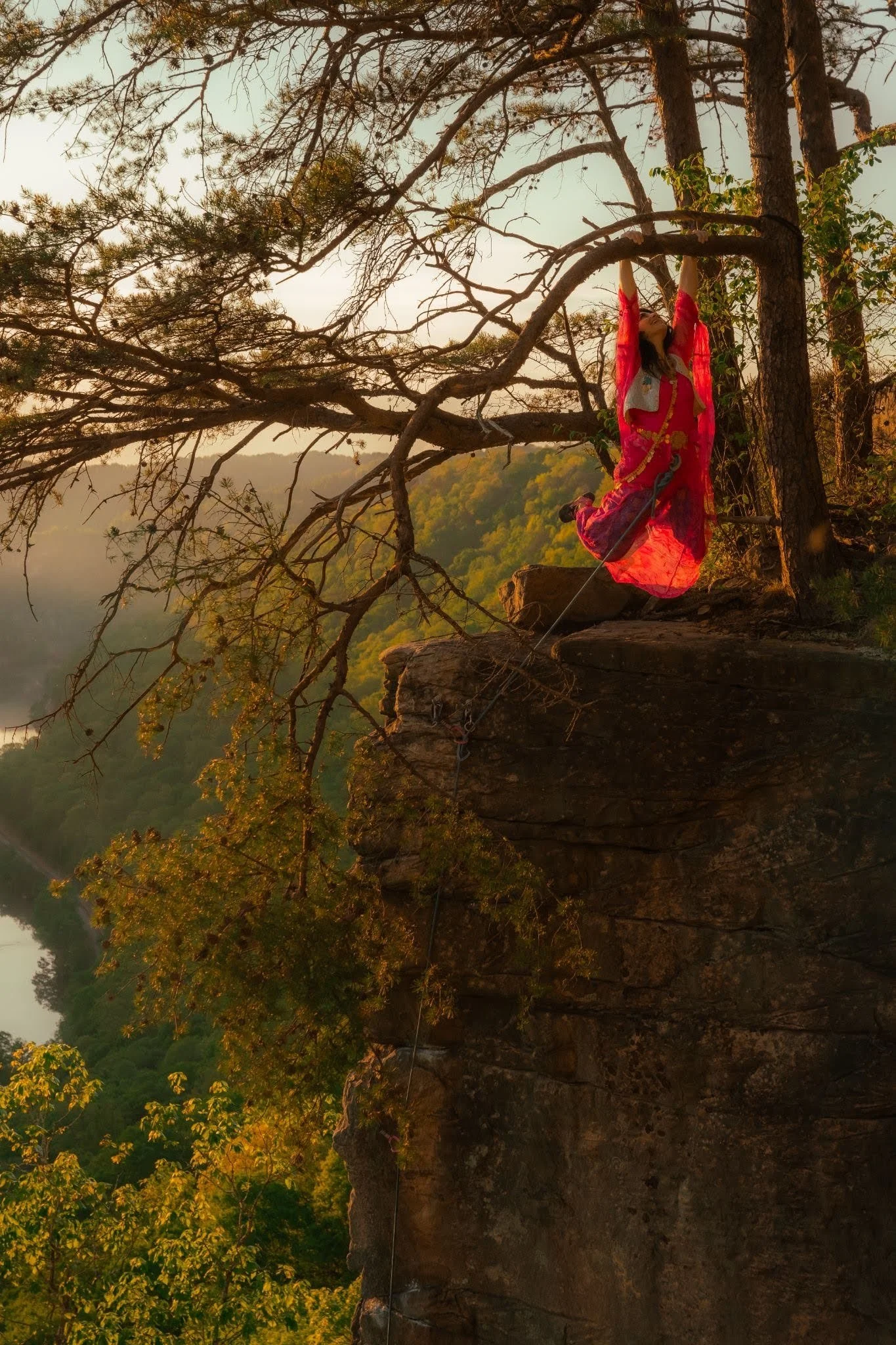
Author finishing with a victory…tree hang? / Photo by Alex Myers
In the mountains, they learn survival. They hunt and fish; learn to fight and ride horses; and nurture joy through song and dance. Kawa crafts armor and weapons, preparing them to save the kingdom. Once trained and armed, Kawa leads them toward the castle. Villagers cheer them on, give them supplies, and join their march. They break through the castle walls, and Kawa storms towards Zahak’s headquarters. He cuts off the king's head, the snakes wither, and the kingdom is finally liberated.
Kawa climbs the mountain above the castle and lights a big fire, letting everyone know they are finally free. Fires are lit all over to celebrate the defeat of darkness and cleanse the land from its hold. The sun shines its rays again, flowers bloom through the grasslands, and animals return to graze and nourish the land. From that day on, our people have gathered every year on March 21st to celebrate Nawroz—gathering to eat, dance, and sing together. Today, Nawroz is over 3,000 years old, one of the oldest holidays in the world.
This year, our celebrations were shrouded by a cloud of war. The holiday fell during the 3rd week of the U.S.-Israel war on Iran. The enjoyment of our most joyful season in Kurdistan—Spring—was taken away from my family by a power-hungry empire and its regional extension. Sometimes, it’s hard to maintain hope when told we live in unprecedented times. Society tries to convince us that we are in an era of infallible evil and concentration of power. But we Kurds carry this annual reminder that the struggle against oppressive control is core to the human experience. Our reality is not unprecedented, and it is definitely not infallible. The story of Nawroz reminds us of the importance of humility, empathy, and strength. It doesn’t let us forget the power we all hold against tyrannical systems. It teaches us that no amount of oppression, control, or cruelty can overcome a united people and the persistence of life & love. This is a lesson we Kurds hold dear, and one much of the world could use right now.
Although we may be angry our celebrations of Nawroz were dulled this year, from the core of our holiday we can extract strength. Like the kids Kawa rescued who maintained song and dance in addition to food, shelter, and protection, by keeping silly activities like rock climbing in our survival plan, we choose to hold the beauty of existence despite its pain. We get to experience in small doses the ecstasy of freedom, and may that reminder strengthen our ability to build a more liberated future for all.
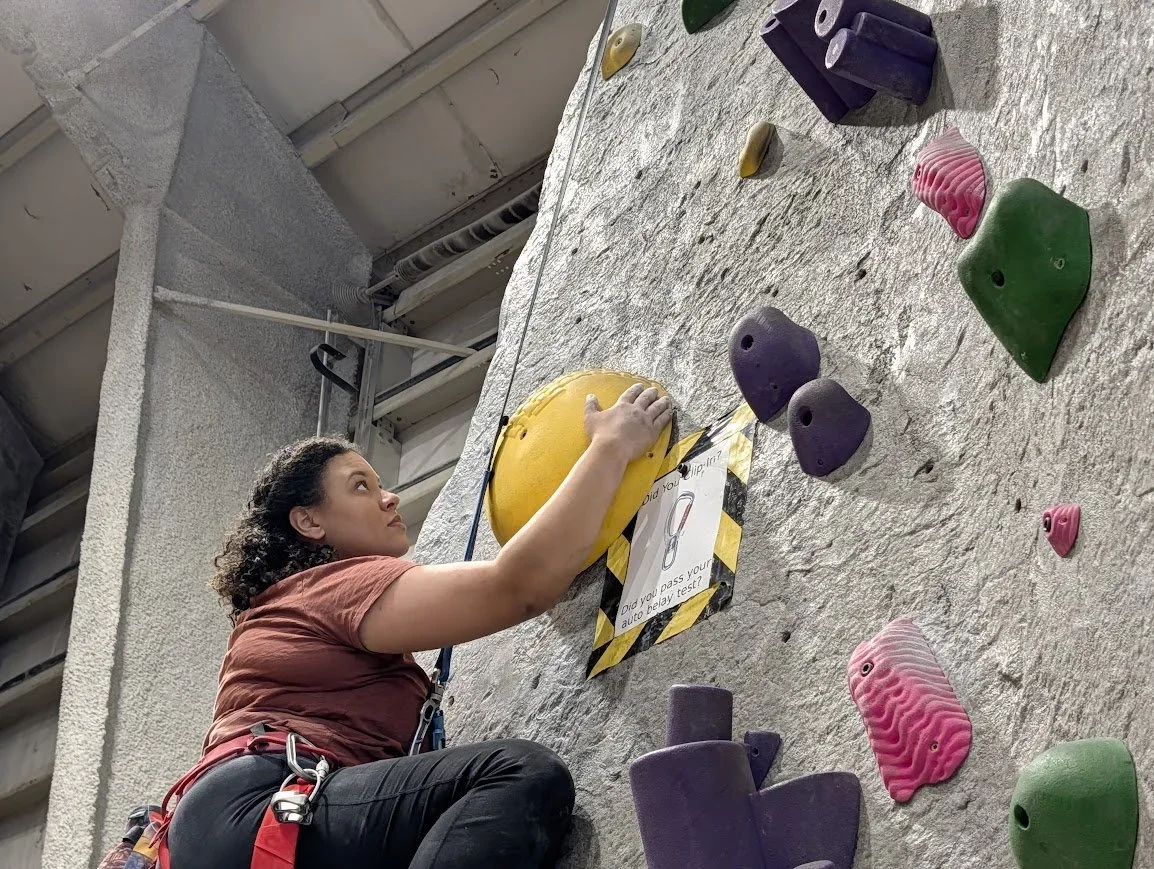


In 2021, I became the first female Kurdish sport climber in Bashur, Kurdistan (Northern Iraq). Everything I climbed was a first female ascent. This at first felt exciting! But with time, I realized it was a testament to the hardship Kurds have faced over the years.