
Black Nature Stewards Moving Us Forward
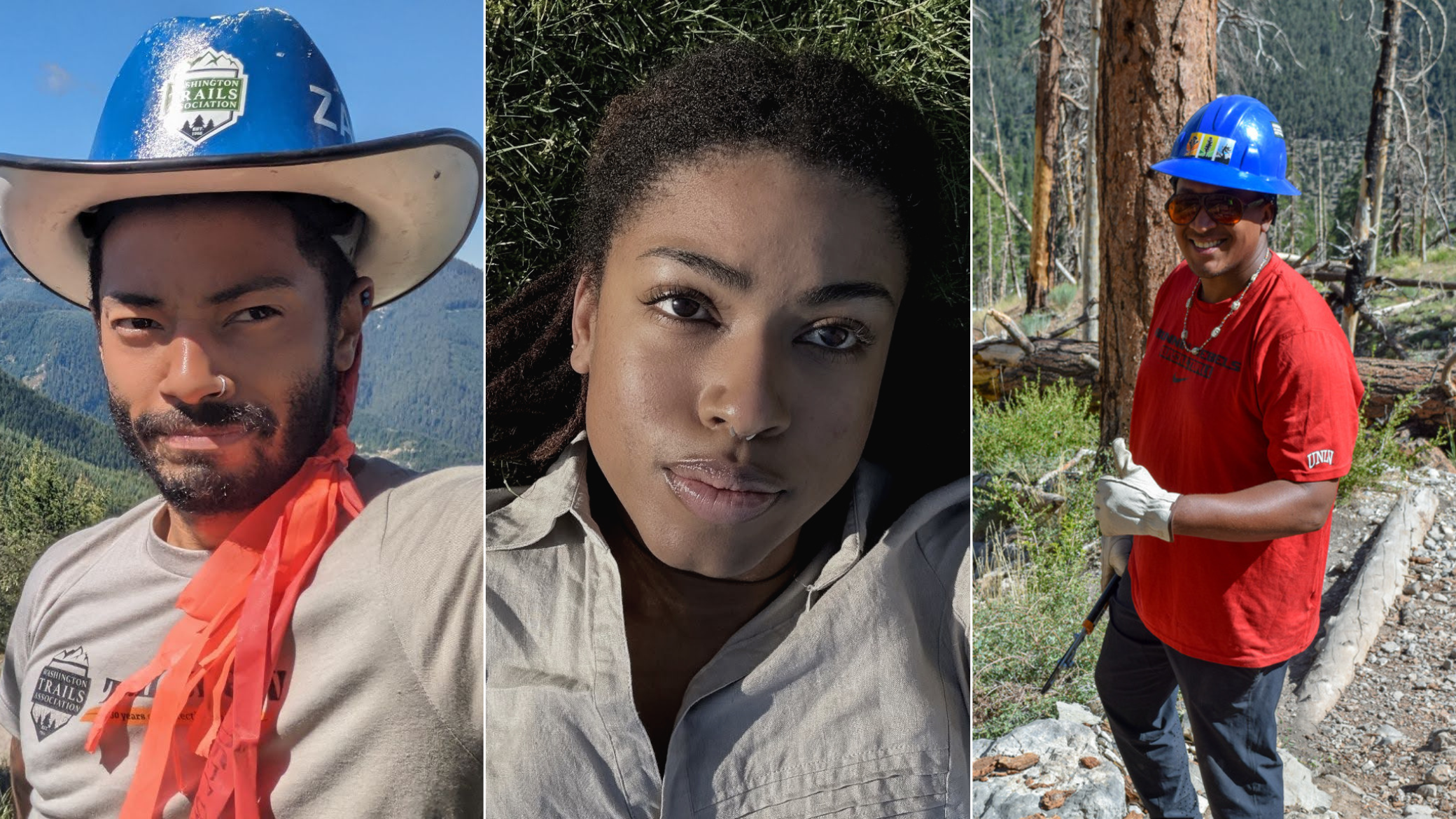
Black people have a long cultural history of environmental advocacy. Though we haven’t been welcomed outdoors.
Today, we’re bringing attention to three Black nature stewards who are out there doing the work, while protecting natural areas, improving access and getting more Black people outside.
They follow in the footsteps of Black environmental greats like John Francis, who earned the name “Planet Walker,” and Hazel Johnson, known as the “Mother of Environmental Justice.” Francis walked much of the world in protest of our reliance on fossil fuels. Johnson led a grassroots movement that held leaders accountable for air and water pollution in Black neighborhoods in Chicago.
For generations, Black people have done unseen work, promoting and protecting green spaces and our right to be in nature. Let’s shine a light on their legacy:
Sydni Mullen (She/Her)
Seattle, Washington
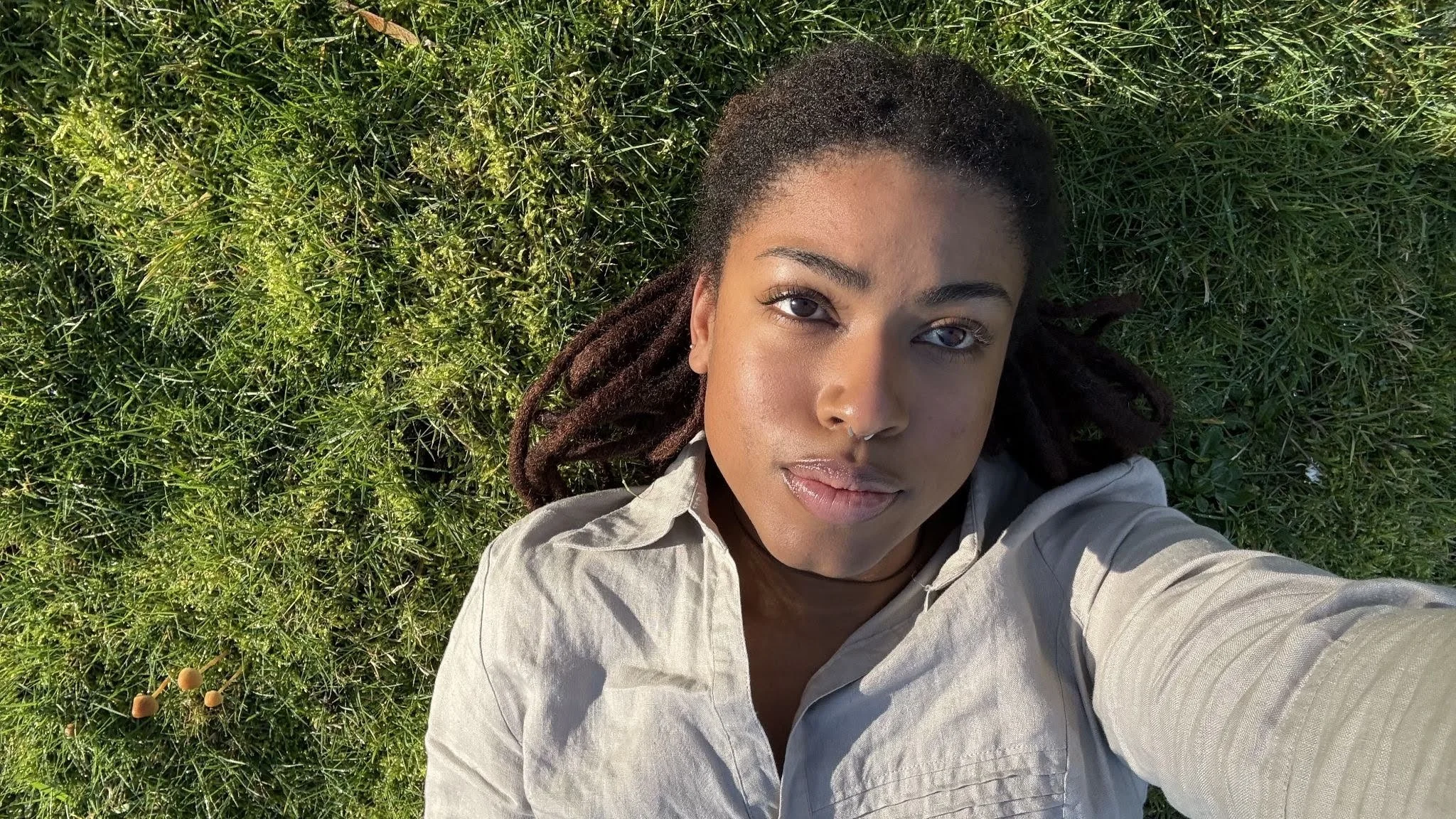
Sydni Mullen enjoys an afternoon outdoors.
Sydni Mullen grew up in Fresno, California, hiking trails throughout the state’s Central Valley. As a kid living in a city she describes as “a red streak” in otherwise progressive California, she was used to her family being the only Black people she saw in most wilderness areas. Now an adult, living in Seattle, Mullen is aware of how her race impacts her experiences outdoors.
“I very much know who I am, my identity, what that means for my safety and protection in these natural spaces,” Mullen says, “I could have a run in that could be a threat to my life.”
Mullen’s experience navigating underrepresentation is familiar to Black recreationists. As a Black nature steward, she brings attention to barriers to the outdoors for BIPOC recreationists.
A well-known influencer in Black environmentalism social media spaces, Mullen reaches 45.4K followers on her earth2sydni Instagram profile. Follow her through the misty, temperate rainforests and coasts of Washington state.
“As a Black girl, I want people to see outdoor content, see me there, see Black people outdoors and say, this is a very normal experience — diversity exists outdoors,” Mullen says.
But the reception isn’t always positive. “I get millions of comments asking ‘why is that relevant, or are you planning on stealing something?’” she says.
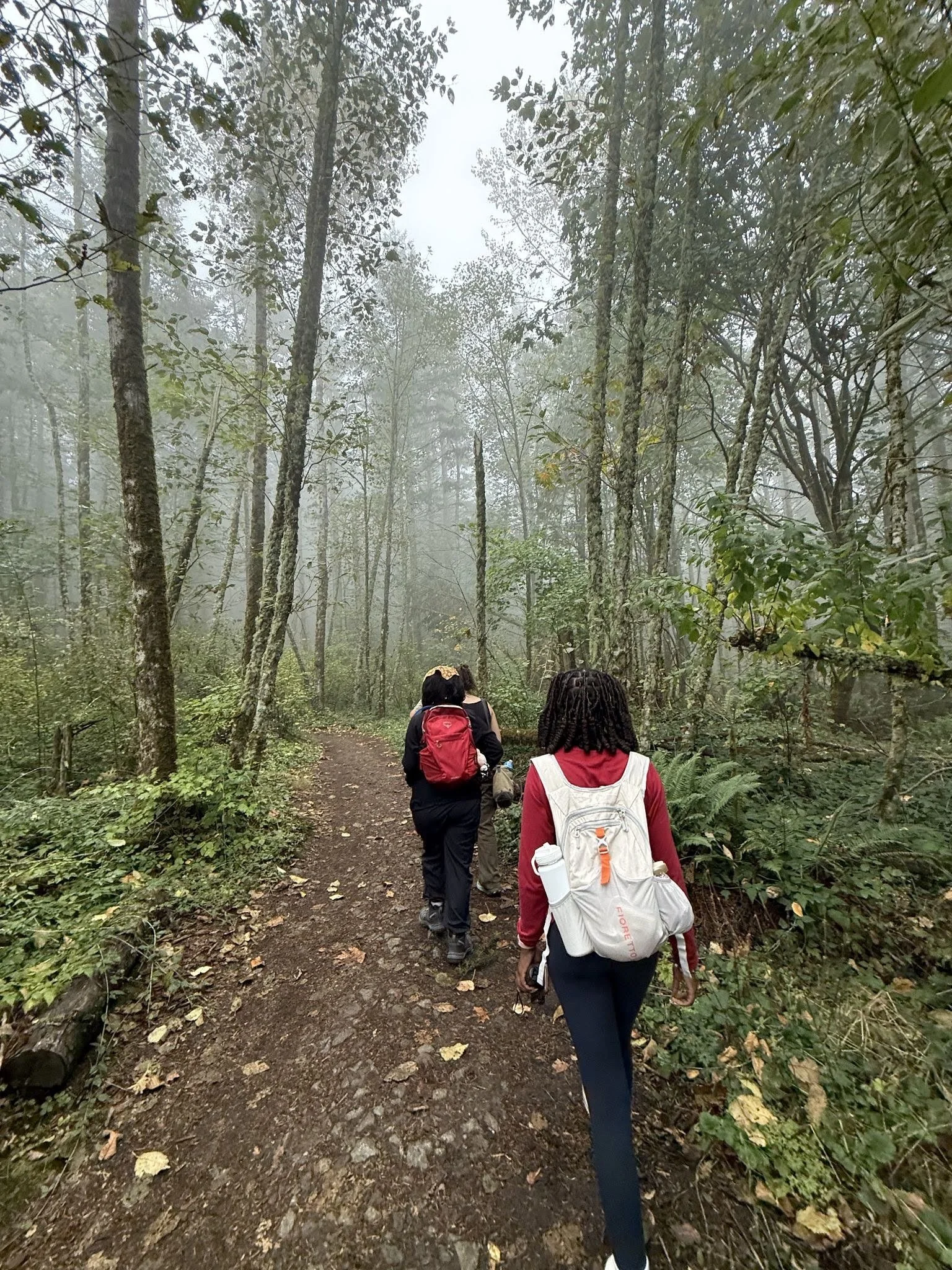
Sydni Mullen leads Hike+Yap, her met-up focused on BIPOC hikers. Photo credit: Sydni Mullen.
“Which, to me, signifies that there’s still very much a disconnect between this idea of who the outdoors is for, who can enjoy those spaces, and who can be in those spaces,” she adds.
For Mullen, making the point that Black people belong in nature, too, can be as simple as an Instagram post of her foraging or removing litter on seaside hikes. A self-branded “earth girly,” Mullen gives followers tips on herbalism, drawing from her academic background in microbiology.
As she encourages more people outdoors, Mullen uses social media to foster environmental stewardship, highlighting sustainable brands, leave no trace principles and books on conservation.
Outside of digital spaces, she has worked on habitat restoration and invasive plant removal projects for the Washington Conservation Corps. Mullen regularly hosts Hike+Yap, a hiking meet-up she describes as “BIPOC-centered, Black girl-led.”
Zachary Toliver (He/Him)
Tacoma, Washington
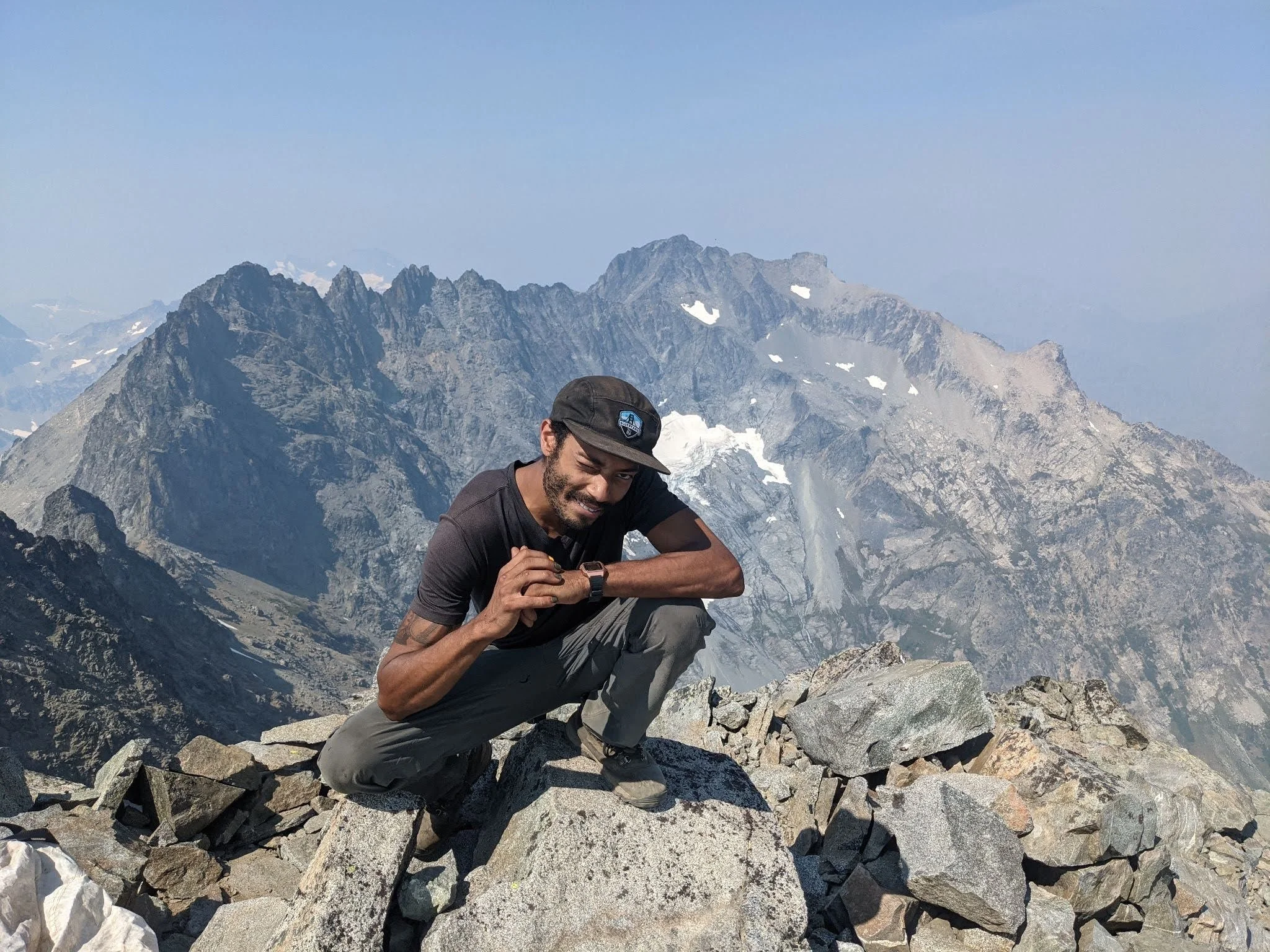
Zachary Toliver in the mountains of Washington state.
“I’ve always been an outdoor kid,” Zachary Toliver says about his childhood years skateboarding, or hiking and gardening and with his grandma in the Midwest. In college, he moved to Tacoma, Washington where he got into rock climbing, which led him to trail work.
“I don’t know if it’s the adrenaline connection, or what, but I know a lot of ex-skateboarders get into climbing, and it’s kind of an excuse to go try hard with the homies in the woods,” Toliver says.
Toliver wanted to do something to protect the wildlife around local crags. That’s when he connected with Brian Doyle, the co-owner of Climb Tacoma, one of the few BIPOC-owned gyms in Washington. Toliver and Doyle worked with the advocacy group Access Fund to build sustainable trails to area crags.
“Crags … people are going to get there one way or another, so it's nice to have a sustainable trail to get there, “ Toliver says. “It doesn’t create social trails, a lot of climbing crags suffer from stuff like that.” Social trails are unofficial trails created by going off designated trails, which causes erosion and harms ecosystems.
In 2020, Toliver joined the Washington Trails Association Emerging Leader Program, which gives paid work and training opportunities to BIPOC young adults who want to work in conservation.
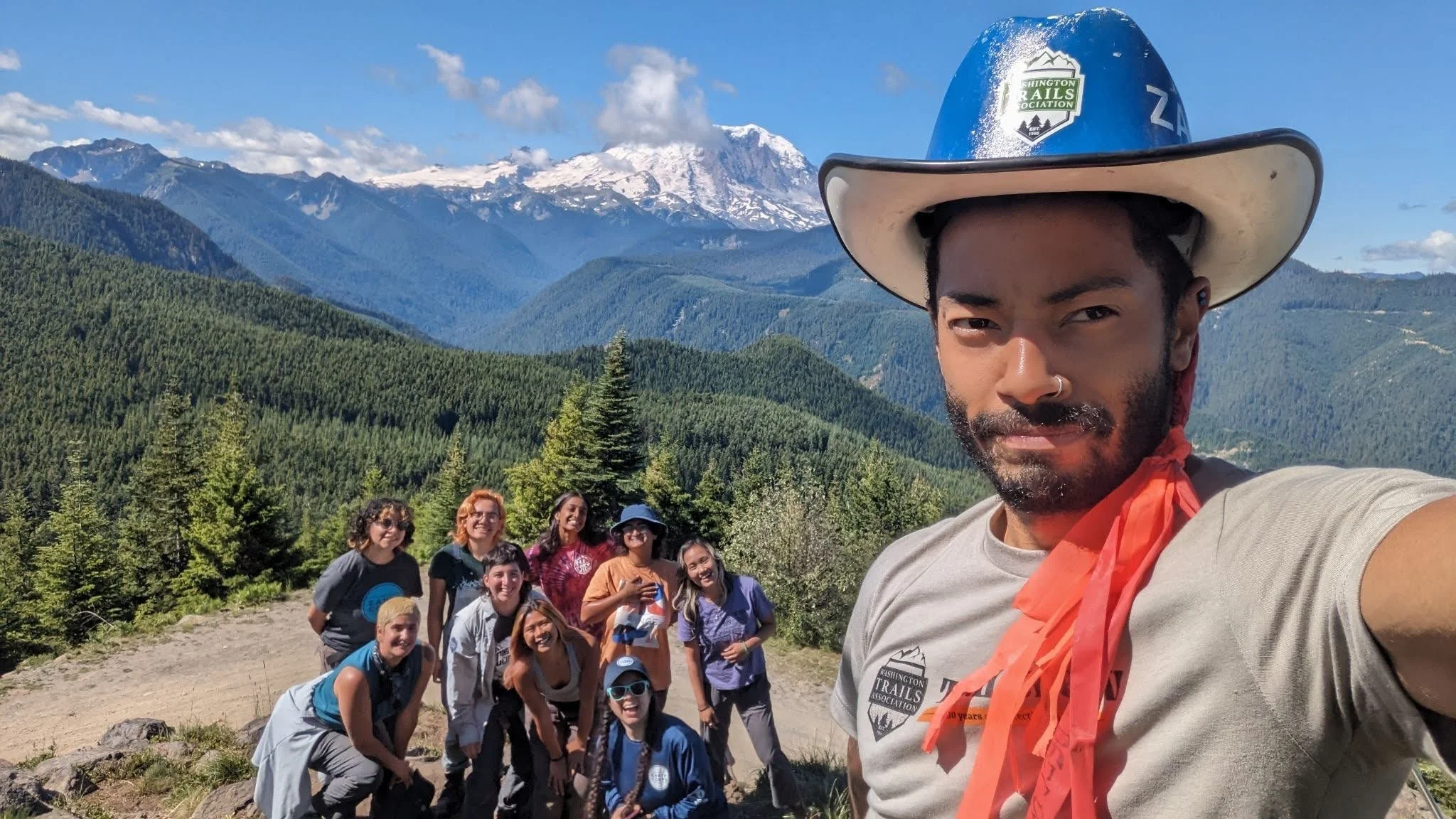
Zachary Toliver leading nature stewards for the Washington Trails Association.
Toliver trained with WTA in trail building and as a U.S. Forest Service certified sawyer, and led trail crews in Washington’s back country. Sadly, state funding was cut in 2026 for the Emerging Leaders Program, which was put on pause for the year.
Toliver’s crews spent weeks at a time in the backcountry, rehabilitating trails in areas such as North Glacier Peak Wilderness and Puget Sound. The work was physically exhausting, requiring trail workers to use manual, specialized saws to clear logs from trails, to prevent noise pollution.
Trail building is also deeply rewarding. “I guess it kind of showed me what a small group of people is capable of,” Toliver says. “We really tried to fix these areas that needed some love and care and might not get it for a while.”
Shi-Lynn Campbell (He/Him)
Las Vegas, Nevada
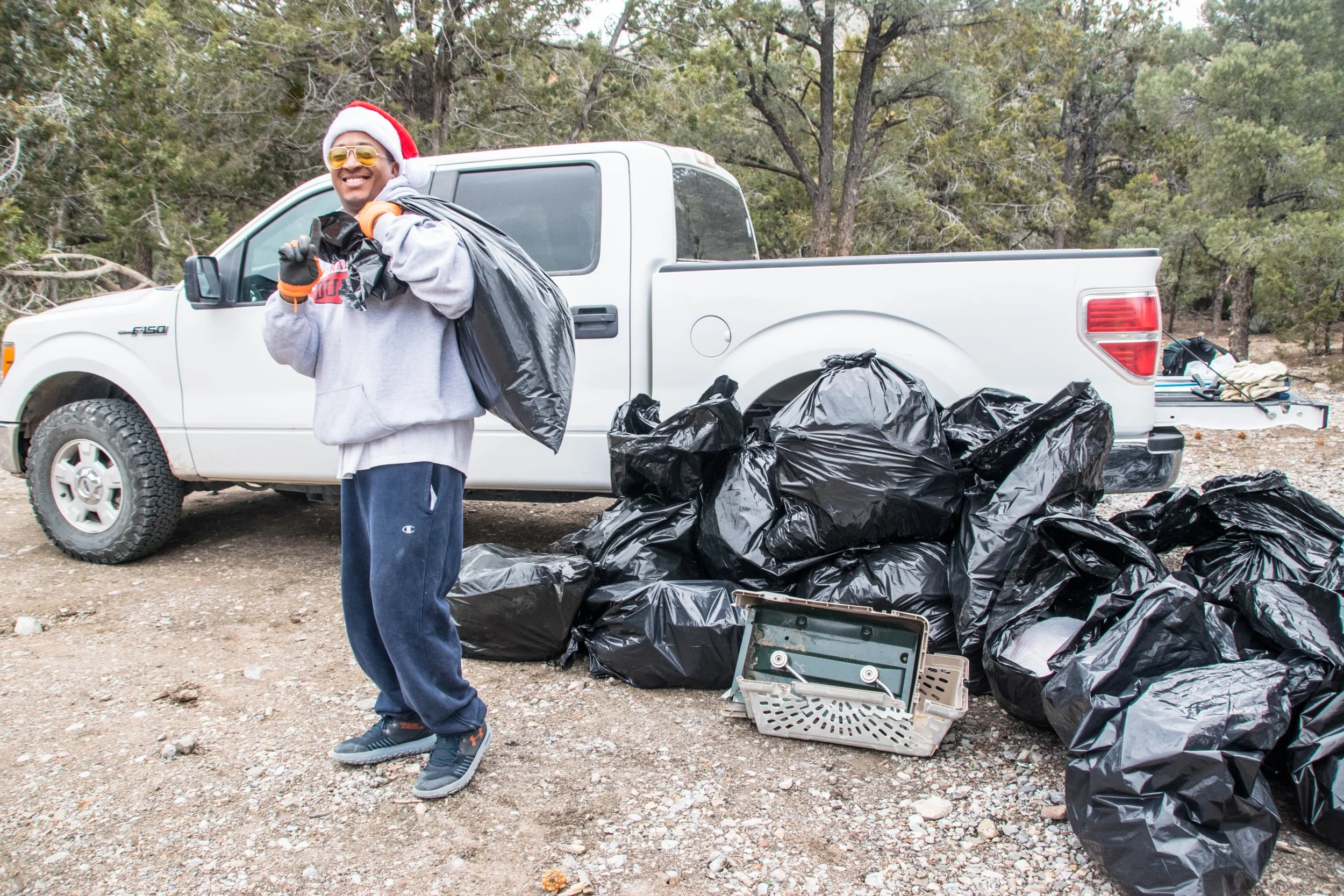
Shi-Lynn with a Santa sack full of trash left in Lovell Canyon, Mountain Springs, NV.
When Shi-Lynn Campbell caught the hiking bug more than fifteen years ago, he noticed that the wild spaces he was falling in love with were full of trash that wasn’t packed out. He wanted to do something about it.
“Hiking group leaders were teaching me, just take an extra bag with you and try to pick up trash,” Campbell says, “So it turned into, how can I keep this space as nice as I can.”
Campbell scaled his environmental efforts by joining an influential campaign for National Monument status for the Gold Butte wilderness area, known for its ancient petroglyphs and rock formations.
President Barack Obama declared Gold Butte a National Monument in 2016. “That was my first win. That was the first time I joined a conservation campaign,” Campbell says.
He was hooked on the outdoors and the mission to preserve Nevada’s wild lands, geology, and Indigenous culture.
“When you visit these spaces, you’re looking at a million years of geological history, and human history from 8,000 years ago — that’s something special, and it needs to be protected,” Campbell says.
He works with outdoor groups throughout the Southwest on clean-ups and sustainable trail builds. Campbell installed trailhead signage in the Desert National Wildlife Refuge and other wilderness areas, focused on leave no trace, wayfinding, and outdoor safety. Signage prepares hikers for what’s ahead and reminds them to be good stewards, Campbell says.
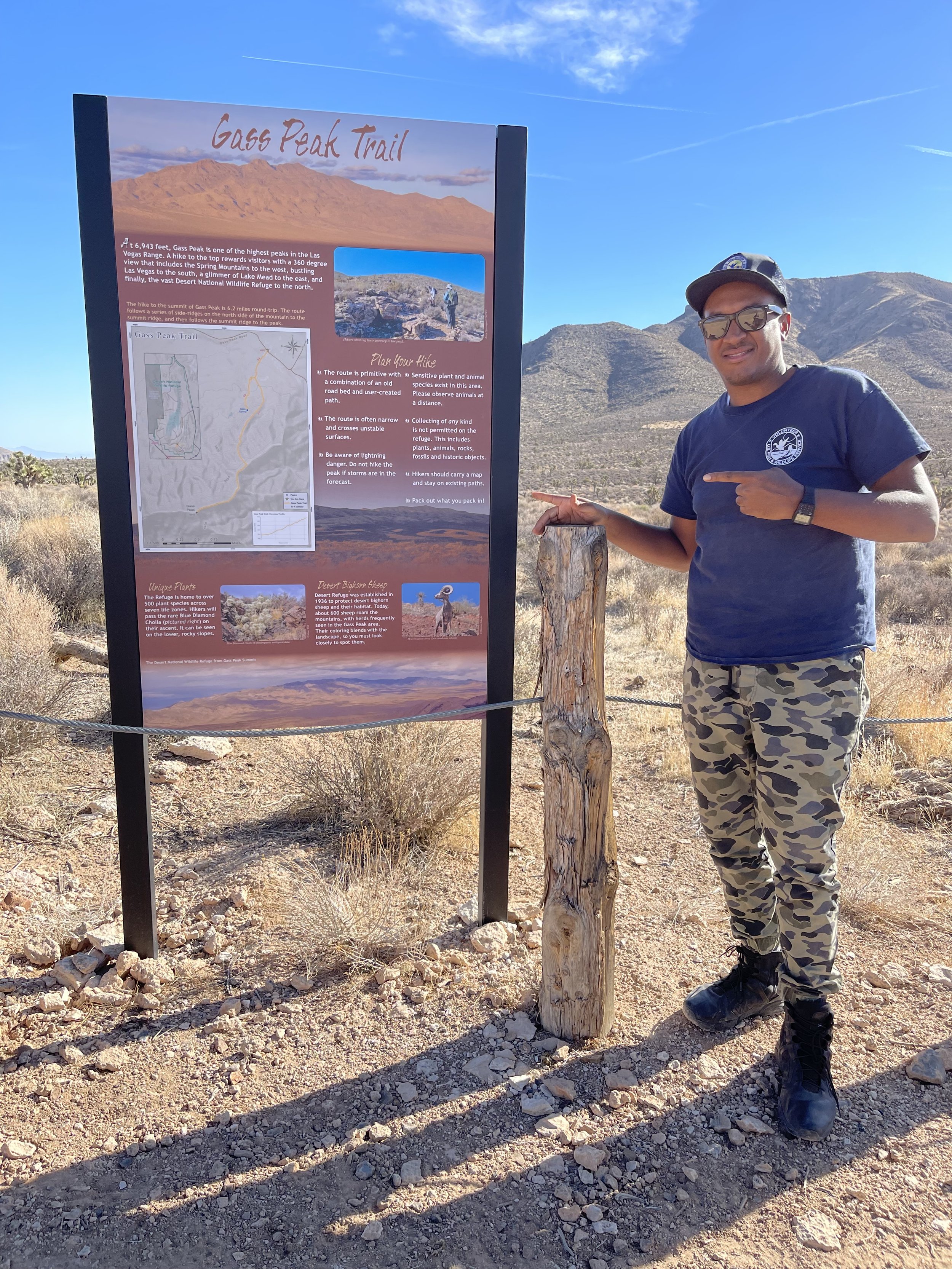
Shi-Lynn poses next to a sign he designed and installed with the help of volunteers. These backcountry trail kiosks keep hikers safe and on trail.
“We can bring a little bit of education and community into those remote spaces,” he says. Campbell joined initiatives to protect native birds from dying by being trapped in mining claim marker tubes in Nevada. He has worked on projects to remove invasive tamarisk plants, which dry up hot springs when they spread in waterways.
Campbell is a writer and marketer who uses these skills in a career focused on elevating outdoor nonprofits. He is one of our editors here at Melanin Base Camp, dedicated to telling the stories of BIPOC recreationists.
“The reason for Melanin Base Camp was to put these stories out, to say we exist,” Campbell says, “It was to shine a light on those who are already doing it.”
Want to be a nature steward? Here are tips on how to get started.
Start where you are. You can begin advocating for the nature in your own city by starting a Friends of your local park group, dedicated to caring for your favorite urban green space.
Be respectful. Practice Leave no Trace principles. Keep group size limited on trails. Don’t make social trails.
Respect yourself, too. Be mindful of where you volunteer. Don’t work for organizations you sense may only be using your labor for photo opportunities. Only partner with organizations that genuinely support Black people outdoors, and don’t simply use us as a hashtag for a social media campaign.


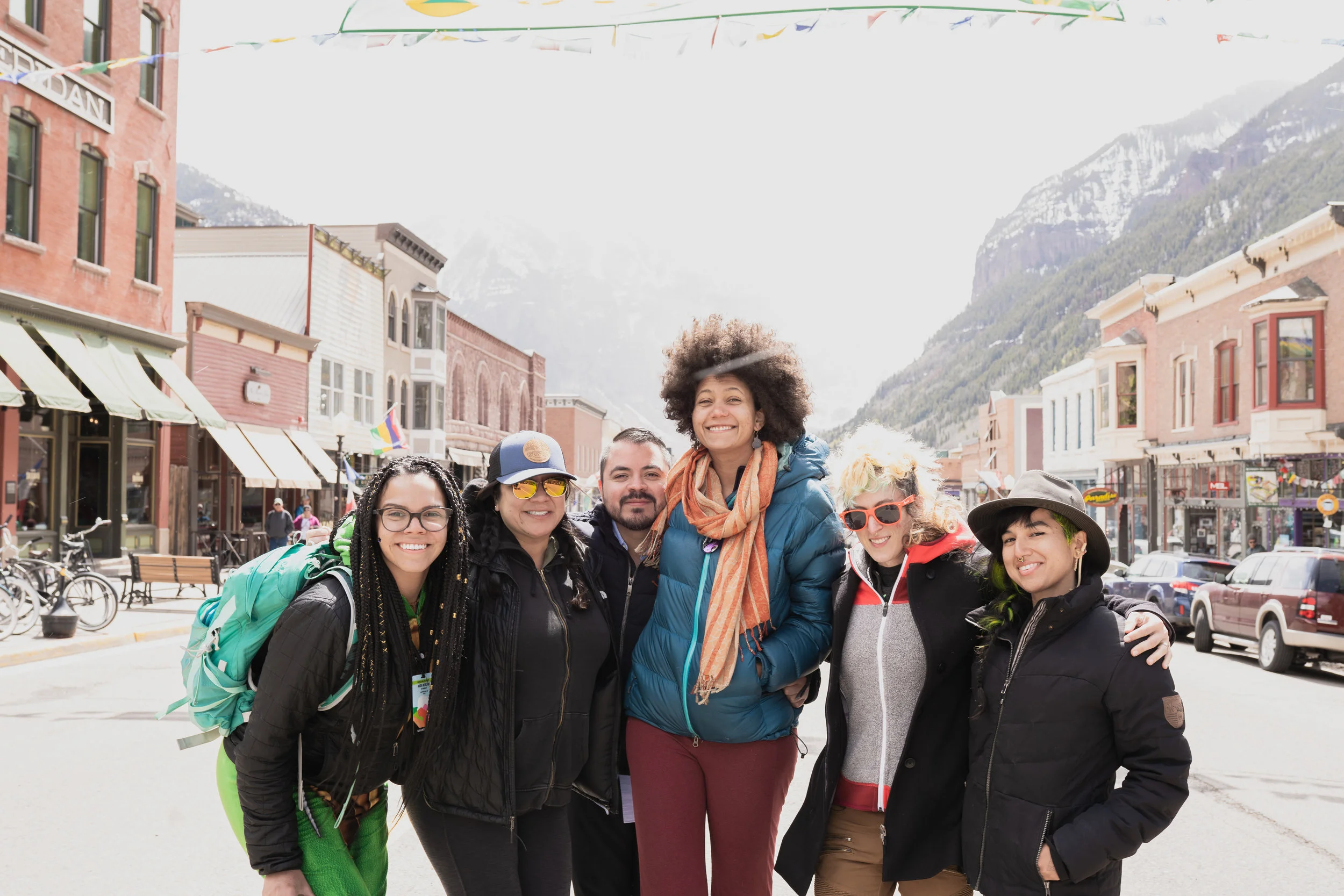
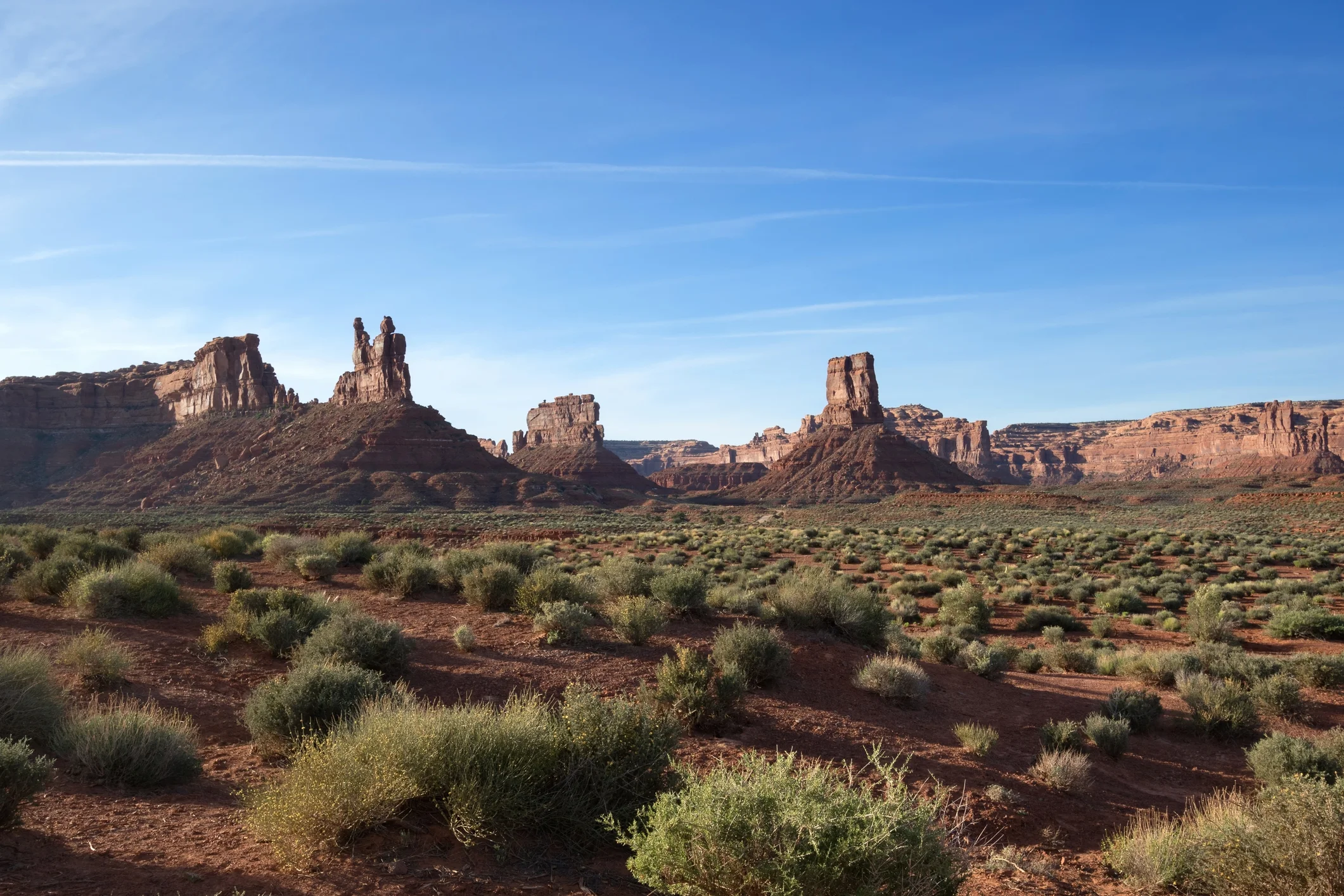
We’re bringing attention to three Black nature stewards who are out there doing the work, while protecting natural areas, improving access and getting more Black people outside.