Surf Fiestas for Belonging at the Beach
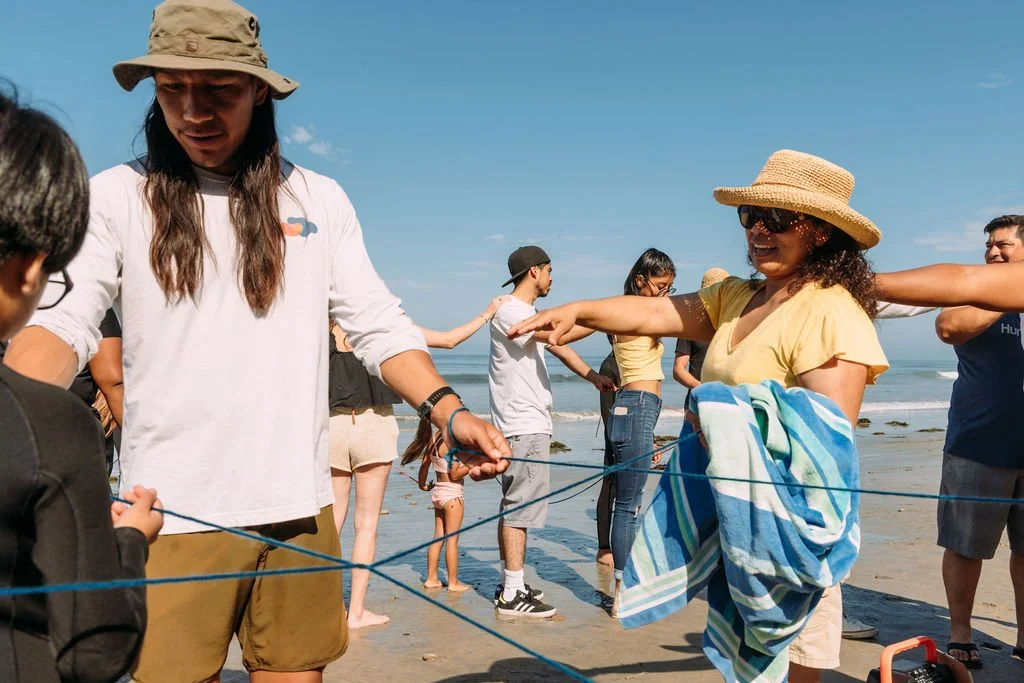
Un Mar de Colores led a “community web” exercise on the sand before everyone got in the water to surf. (Photo credit: Brennen Daniels, courtesy of Un Mar de Colores)
I come from a family of beach lovers. My great-grandmother was Indigenous, from La Libertad, El Salvador, and she taught my Mom that a higher power existed in the ocean. I grew up swimming, boogie-boarding, and kayaking.
I've always wanted to be a surfer. I tried here and there, taking two-hour lessons once a summer at our annual family vacation in the Outer Banks, North Carolina. But I got my first real chance to learn surfing when I moved to San Diego County in 2023.
I knew surfing would be intimidating, but I did not know that surfers would be intimidating in the water.
The surf lineup is usually competitive as surfers jostle for position, following protocols about who gets to ride the next wave and how to stay out of each other’s way. Southern California is filled with incredibly talented surfers, and as a beginner new to the area, I found it genuinely intimidating just to paddle out. Mario Ordoñez-Calderó started Un Mar de Colores in 2020, in part, because of this unwelcoming dynamic.
As a U.S. Navy veteran, Indigenous Mayan, and surfer, Mario had a similar experience when he started learning to surf. Mario noticed something about the surf lineup; Despite San Diego's proximity to the U.S.-Mexico border and its diverse population, the people in the water all seemed to look and sound the same.
Mario founded the nonprofit Un Mar de Colores to bring global majority kids in San Diego County to the beach and teach them to surf, be safe in the ocean, and be stewards of the environment.
Finding Un Mar de Colores
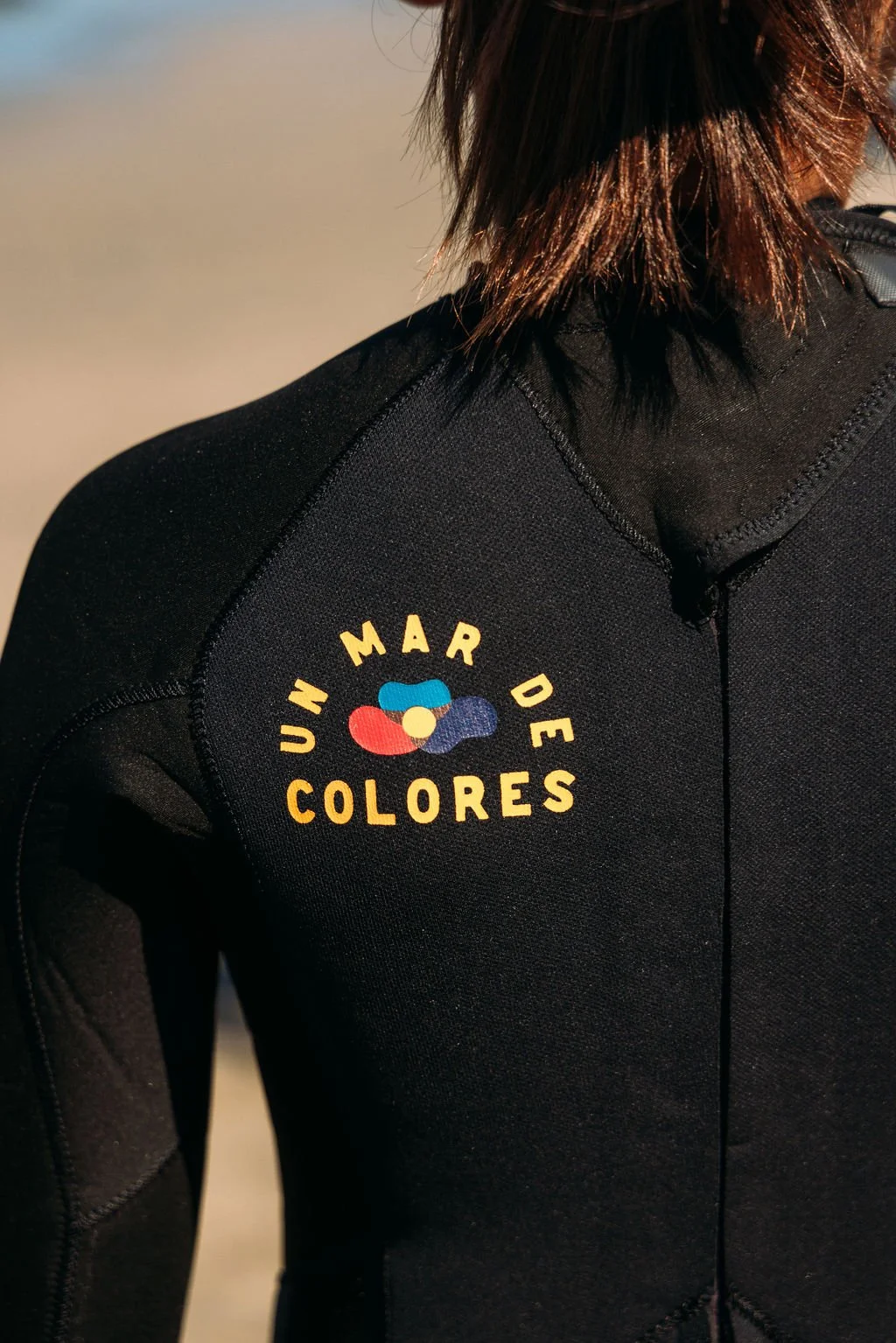
Un Mar de Colores provides wetsuits for the kids in the program learning how to surf. (Photo credit: Brennen Daniels, courtesy of Un Mar de Colores)
When I first moved from Washington, D.C. to San Diego County, I was exploring ways to become an active part of the community here. At an environmental film festival at Coastal Roots Farm, I introduced myself to the local nonprofits that had booths set up and learned a bit about their work. One organization immediately caught my attention: Un Mar de Colores — "an ocean of colors."
Un Mar de Colores provides underserved kids from across San Diego County with year-round programming designed to build lasting relationships. Un Mar de Colores offers everything the surfers need completely free — surfboards, wetsuits, and instruction — thanks to grants and donations from individuals and organizations like Prana. Students stay engaged with the Un Mar de Colores in cohorts for at least two years, creating deep bonds with each other, with volunteers, and with the ocean itself.
Un Mar de Colores cultivates equity in surfing by celebrating diversity and the very thing that connects us all: the ocean.
The surf lineup is usually competitive as surfers jostle for position, following protocols about who gets to ride the next wave and how to stay out of each other’s way. Southern California is filled with incredibly talented surfers, and as a beginner new to the area, I found it genuinely intimidating just to paddle out. Mario started Un Mar de Colores in 2020, in part, because of this unwelcoming dynamic.
Having grown up in Southern California, Mario wanted to create pathways for kids who might lack access or be intimidated, kids who shared his background. Un Mar de Colores, which celebrated its fifth anniversary in August 2025, operates on a simple but profound principle: one ocean touches all shores, and everyone has the right to enjoy this beautiful part of our planet.
Waves of Change
Un Mar de Colores provides underserved kids from across San Diego County with year-round programming designed to build lasting relationships. Un Mar de Colores offers everything the surfers need completely free — surfboards, wetsuits, and instruction — thanks to grants and donations from individuals and organizations like Prana. Students stay engaged with the Un Mar de Colores in cohorts for at least two years, creating deep bonds with each other, with volunteers, and with the ocean itself.
I began volunteering with Un Mar de Colores nearly two years ago, starting with their winter mentorship program. Five of us volunteers were matched with five surfers, and our group of 10, along with the surfers' families, met monthly throughout the winter. The colder months bring bigger waves and rougher conditions that make surfing more challenging, so we spent time together each month rock climbing, kayaking, and enjoying trampoline parks. These gatherings kept the kids engaged through the school year and reinforced that Un Mar de Colores is about building community, not just teaching surfing.
Each summer, Un Mar de Colores hosts "surf fiestas" over one weekend each month. These gatherings are where the magic really happens.
We arrive at the beach by 8 in the morning, set up a couple big tents and tables, and begin the day with a rotation of stretches, meditations, and lessons on environmental stewardship, emotional and mental health, and what it means to build community. Partner organizations sometimes join us to lead games or arts-and-crafts using natural materials — seaweed, sand, whatever the beach provides.
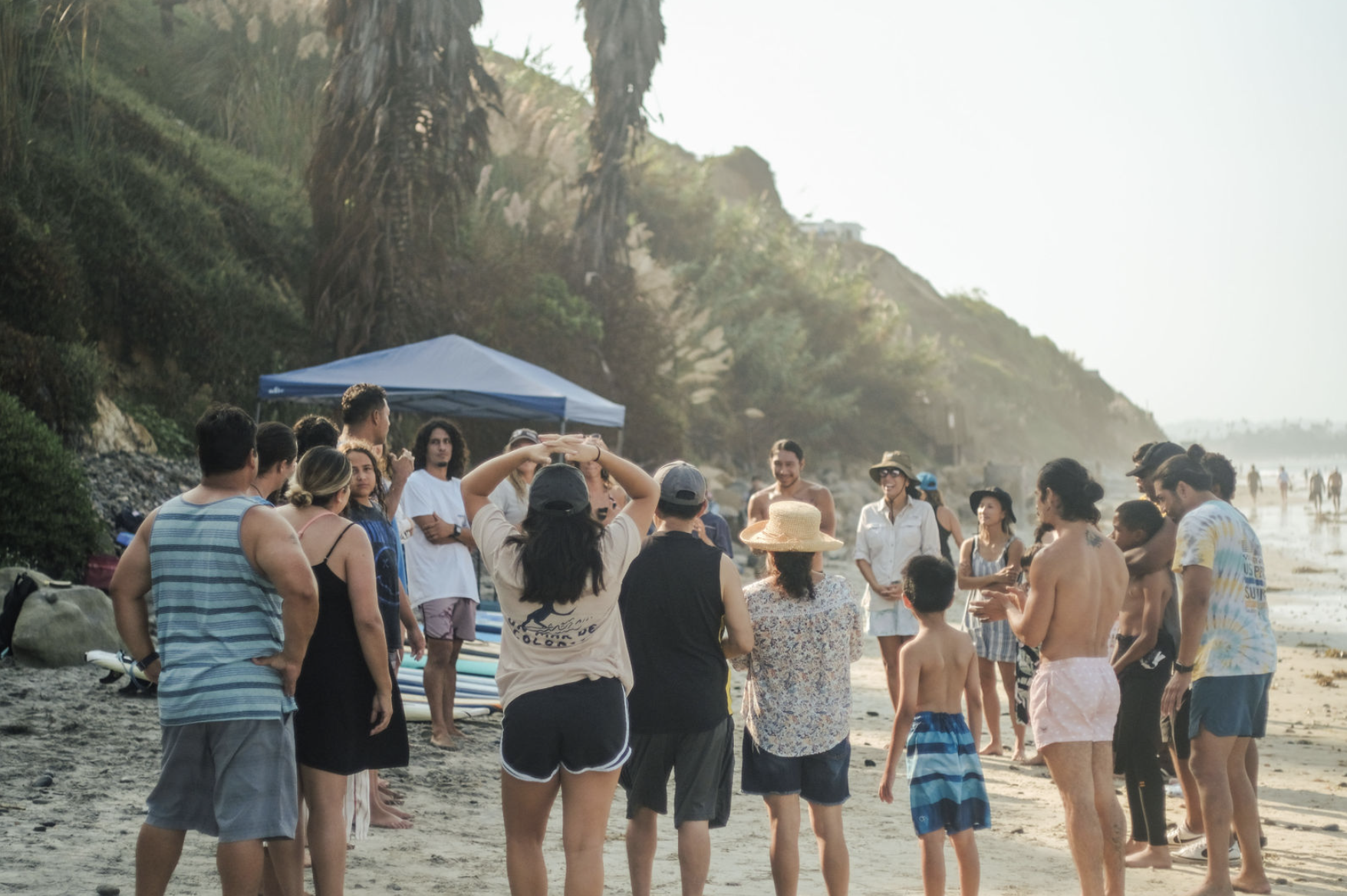
Un Mar de Colores brings together wonderful people in a wonderful place. (Photo credit: Brennen Daniels, courtesy of Un Mar de Colores)
Then comes the surf skills training and ocean safety reminders, which is crucial work as the summer brings its own set of risks. While June through September offer warmer water and smaller, gentler waves compared to winter's aggressive swells, summer is also stingray season. One of the first safety lessons we cover is the "stingray shuffle," dragging your feet through the sand as you walk in the water to let the stingrays know you're coming, giving them time to scatter before you accidentally step on one and get stung.
After these sessions on the sand, we head into the water. For the surf fiestas, we typically stay in the whitewater, where waves have already broken, and volunteers push kids on surfboards so they can practice popping up and dismounting safely. Some kids boogie board or simply play in the sand, learning about currents, building sand castles, and spotting dolphins in the distance. The goal isn't perfection, it's connection: connection to each other, to the ocean, to something larger than ourselves.
At the end of each session, we gather again on the beach under Un Mar de Colores’ tents and share a potluck lunch that the surfers' families have prepared. The food is always homemade and always delicious. We close by going around the circle, offering shout-outs and gratitude to each other for showing up and spending the day together. Witnessing, month over month, how everyone's confidence and skills are growing is beautiful.
More Than Surf Lessons
The Un Mar de Colores team and volunteers don’t just teach kids to surf; they teach them that they belong. This matters more than I might have realized at first.
Like any other place, California's beaches have a history. Through times of discriminatory zoning and harassment in coastal areas, many Latin American, Black, Indigenous, and other minority communities were systematically excluded from beach access. The effects of this history persist in who feels comfortable at the beach and in the surf lineup today and who doesn't. Un Mar de Colores is working to break down those barriers.
The organization's positive impact extends beyond teaching kids to catch waves. Some parents have shared how their kids were once afraid of the water but now eagerly run into the surf. We see the surfers become tight-knit cohorts, and we hear them talk about how the courage and confidence they find while surfing seeps into their everyday lives.
Beyond the Beach
Un Mar de Colores' work doesn't stop at the shoreline. The organization actively advocates for environmental causes affecting San Diego County. One of their primary focuses is the Tijuana River.
In 2024, American Rivers named the Tijuana River one of America's Most Endangered Rivers, highlighting the urgent crisis facing this watershed. Decades of neglected and inadequate wastewater infrastructure have led to severe pollution, with toxic waste and sewage flows forcing beach closures, causing serious public health threats, and endangering the Tijuana Estuary, which is the largest remaining natural coastal wetland in Southern California, home to more than 370 bird species and multiple endangered species.
The Tijuana River watershed is the ancestral and current homeland of the Kumeyaay People and important for people on both sides of the U.S.-Mexico border. Un Mar de Colores' leaders recognize that you cannot teach kids to love and respect the ocean while ignoring the environmental catastrophes threatening it. Their advocacy work has become increasingly critical in 2025 as environmental protections face new challenges.
By leading environmental advocacy alongside their surf programming, Un Mar de Colores teaches its young surfers a worthwhile lesson: stewardship means showing up for the places and communities we love, both in moments of joy and in moments of crisis.
The Next Swell
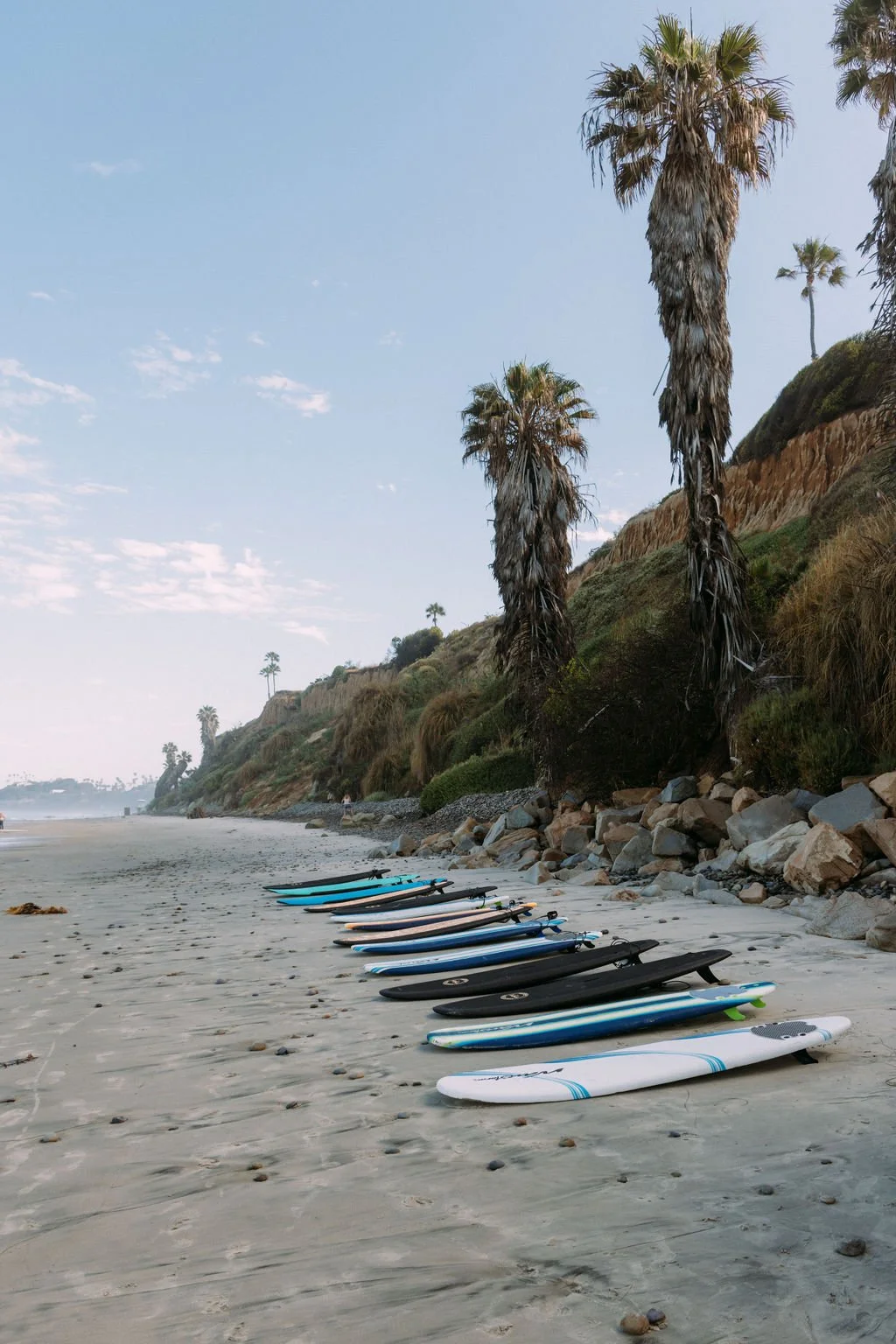
Un Mar de Colores provides the boards to teach the next generation of ocean stewards how to surf. (Photo credit: Brennen Daniels, courtesy of Un Mar de Colores)
Anyone who walks by one of Un Mar de Colores' surf fiestas can't help but smile. There's something contagious about watching a dozen young surfers and 20 volunteers splashing around, cheering each other on, taking party waves together.
Un Mar de Colores has grown tremendously in its first five years. What started as one person's vision to address the lack of diversity in the surf lineup has become a thriving community that has already had a significant, positive impact in San Diego County.
For me, Un Mar de Colores offers another way to feel at home in this new place across the country. I love this community where I can practice my Spanish and contribute to the next generation's relationship with the ocean — even as I remain, admittedly, a pretty mediocre beginner surfer.
As Un Mar de Colores enters its next five years, the importance of its mission grows. Every one of us, regardless of background or ZIP code, deserves to enjoy the saltwater, to try catching a wave, and to feel safe at the beach. Un Mar de Colores reminds me that belonging isn't something you wait to feel, it's something we create together, one surf fiesta, one shared meal, one shout-out of gratitude at a time.





At thirty years old, I had never held a fishing rod. Never tied a fly, never cast a line, never felt the tug of a fish fighting on the other end. But I'd always been drawn to the idea of fly fishing.