
The Mystery of Lake Lanier: Facts and Fiction Surrounding The North Georgia Lake
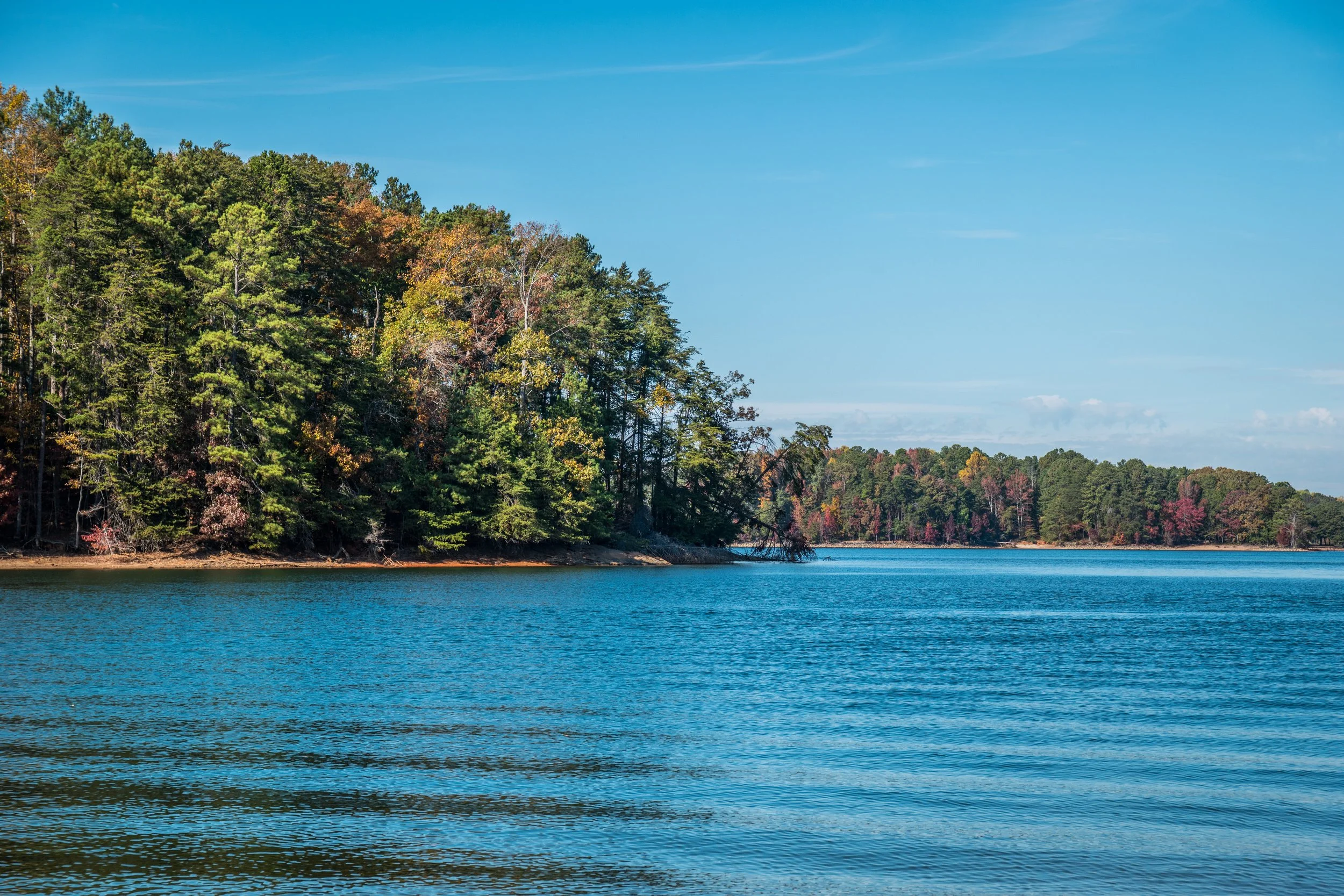
Hundreds Have Drowned In ‘Haunted’ Lake Lanier: Four Facts About The North Georgia Lake, And The Mysteries Left Unexplained. Photo By Sandra Burm.
Lake Lanier in north Georgia is considered one of the most dangerous lakes in the U.S. Between 1994 and 2022, more than 200 people died on Lanier—including 13 in 2023.
The soaring death toll, racial violence, and the flooding of the town of Oscarville to create the man-made lake contribute to the widespread belief that Lanier is haunted.
But the truth about Lanier is hidden beneath the murky depths of myth, as history is clouded by lore. TV shows and books have been written about the more mysterious deaths at Lanier, as lovers of pop culture and the paranormal are captivated by the lake.
What’s The Deal With Lanier?

So, is the lake haunted? Why have so many boaters and swimmers drowned? I interviewed Bob Mackey, a filmmaker and history buff who grew up near Lanier, and Sophia Dodd, an Atlanta History Center researcher, to find out more.
Mackey, who grew up in Jackson, a nearby county, was so tired of the tall tales that several years ago, he filmed a historical series dispelling the myths.
“Nobody really knew the story and I felt it was being dragged along as this social media topic trend,” Mackey said. “[Lanier] was being used for its likeness, not getting the true depth of conversation it deserves.”

One longstanding myth is that Lake Lanier was created to spitefully flood Oscarville, which many believe to have been a historically Black community in Forsyth County. Legend has it that the souls of drowned Black people still haunt the lake.
None of this is accurate—but it is understandably believable. The South has a long ledger of abuses toward Black communities. Notably, hundreds of Black people were violently murdered in the Tulsa Race Massacre, and young Black girls were victims in the bombing of the 16th Street Baptist Church in Birmingham, Alabama.
The truth about Lanier is just as dark and rooted in bigotry.
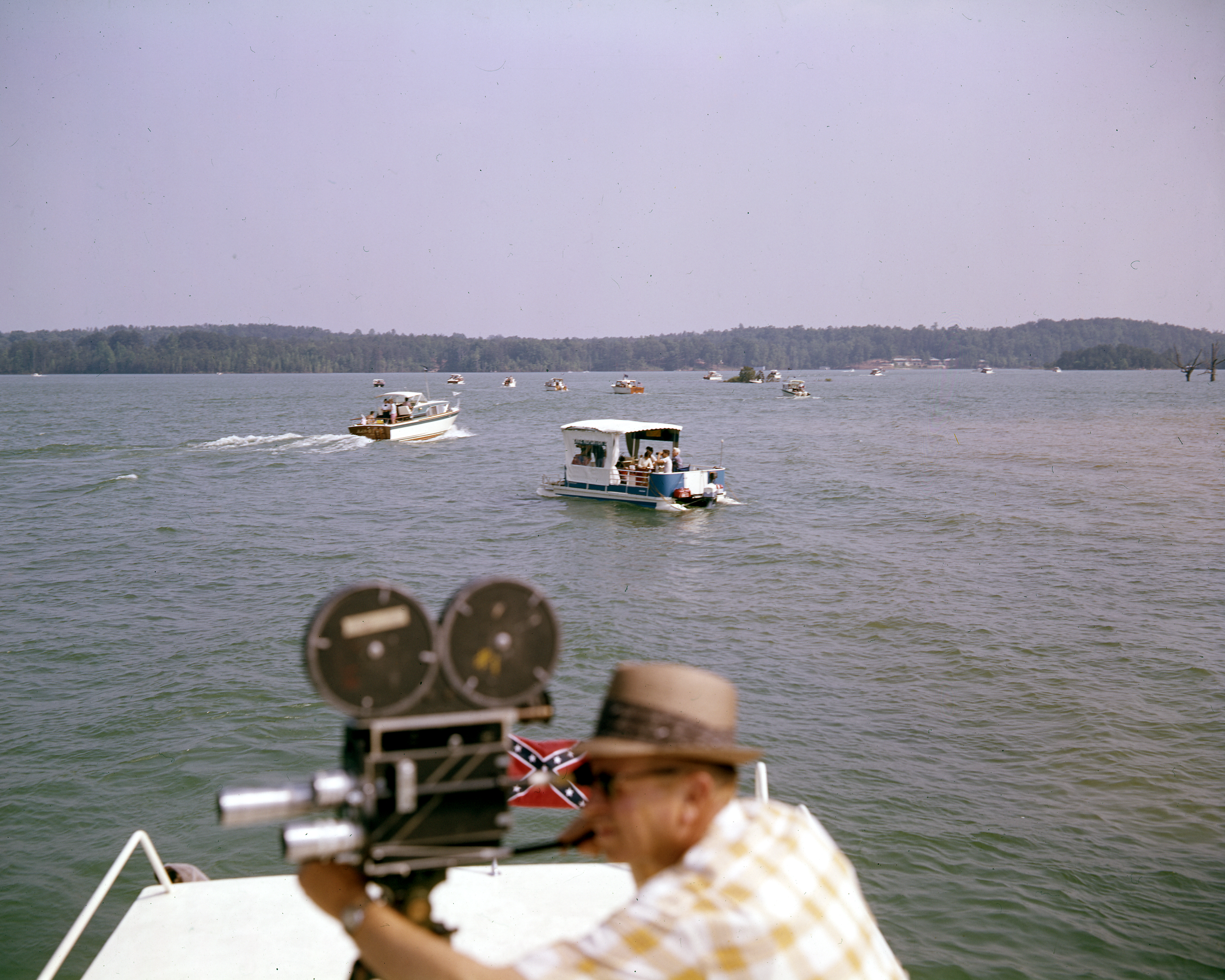
Fact 1: Oscarville Was A Predominately White Town In Forsyth County
And violent, white mobs drove out Black residents throughout Forsyth, decades before Lanier was created, according to the Atlanta History Center.
“The Forsyth County Expulsion and Its Aftermath,” a podcast by the center not connected to Mackey’s work, tells the story of the Black exodus from Forsyth, through primary sources and related accounts.
The violence began in 1912, when two Black men and one Black teen were accused of the rape and murder of Mae Crow, a white woman who was a Forsyth resident. Rob Edwards, 24, was beaten to death and lynched, his lifeless body shot. Oscar Daniel, 18, and Ernest Knox, 16, were hanged after one-day trials with scant, inconclusive evidence.
U.S. history is filled with instances of trial by skin color and Black men being put to death.. Just six years prior, the 1906 Atlanta Race Massacre resulted in the deaths of 23 Black Atlantans at the hands of an angry white mob that believed sensationalized reports about Black men attacking white women.
Some people say the spirits of these wronged men linger in Forsyth and the depths of Lake Lanier.
The Ugly Aftermath
In the months after Crow’s death, more than 1,000 Black people were driven out of Forsyth by life threatening acts of terror. White agitators shot into homes and set fire to Black businesses and churches. Fred Brown, a Black man who fled Forsyth, recalled the violence in a recording by his son in the early 1980s, archived by the Atlanta History Center.
“They went and put notices up to the houses and give them so long to move, and if they didn’t move, they’d come down and burn your house up, if you was in your own house,” Brown said. “Do anything to you they could do.”
Brown and his family relocated to Knoxville, Tennessee. He and many other Black Forsythians found industrial work in larger urban centers. They picked up their lives, many leaving property behind that they couldn’t sell due to fleeing quickly, Dodd told Melanin Base Camp. She co-produced the history center’s podcast with journalist Rose Scott.
Properties left by Black people were seized by white people in Forsyth, who laid claim to the assets by paying the property taxes. White people who assumed tax payments “could go to court and say … nobody else paid taxes on [a property] for a certain amount of time and they would be awarded that property,” Dodd said.
Today, land grabbers still leverage discriminatory ownership laws to target Black families. Many of these families have generational land, but don’t have a formal deed, because Black land buyers were once entirely excluded from the legal system. Local governments also seize and auction off the land of families who fall behind on property taxes.
White Forsythians stole assets from Black property owners that could have been leveraged to build generational wealth.
Fact 2: Oscarville Wasn’t Flooded To Kill Black Forsyth Residents
Decades after the exodus of Black people from the county, the U.S. military claimed half of Oscarville under eminent domain on behalf of the city of Atlanta, to create Lanier as a fresh water source.
In 1956, the gates were closed on the newly built Buford Dam on the Chattahoochee River, forming Lanier. The dam also provides flood control and hydroelectric power generation.
“Ultimately, white residents from the small section of Oscarville who had previously fought to cleanse the area of Black people had to leave their property to birth the body of water,” writes the Atlanta History Center.
Fact 3: Factors Outside Of The Supernatural Cause Deaths At Lanier
Boaters and swimmers should be extremely cautious. Water recreation is made potentially dangerous by structures on the lake bed that officials didn’t remove due to the expense.
“To this day, rooftops, home foundations, cemeteries and the Gainesville Speedway remain virtually intact beneath the lake,” writes the Atlanta History Center. “These structures make the lake more dangerous for recreational activities and make it difficult for emergency services to recover bodies.”
Boating while under the influence of alcohol is also an ongoing problem. The Georgia Department of Natural Resources reported that in 2022, there were 109 instances of BUI at Lanier.
But who’s to say there aren’t some spooky things going on. Many say that because Lanier covers cemeteries, the ghosts of disturbed souls haunt the lake.
One well-known legend comes from the drownings of Susie Roberts and Delia Mae Parker Young in 1958. Roberts lost control of her car while driving across Lanier on Brown’s Bridge with Young. Only the car and Young’s body were found, but the corpse was missing its hands and toes. Some say they have seen a ghostly figure known as the Lady of the Lake, searching for her missing appendages.
Locals and tourists say they have seen unusual lights drifting over the lake and heard ominous voices. Swimmers have reported feeling hands grabbing their limbs from beneath the waters.
Mackey said that while Lanier isn’t haunted, its geography seems unusual. “When you walk along the shore of the lake, the water will go from crystal clear to midnight black at a moment’s notice,” he said.
“There are certain parts that I will swim in, but to go out in the middle of the lake to dock a boat, I would not!”
I think something about that lake seems sus.
Fact 4: Forsyth County Is Still Healing From Its History Of Racial Cleansing
As a teen in Jackson, Mackey, 41, remembers being warned to stay away from Forsyth.
“Anytime [our high school’s athletes] would have games close to that area, a lot of Black kids were not allowed to attend the games by the parents,” Mackey said. “Because there were stories a long time ago that displayed violence toward Black people who would attend the area for recreation.”
Forsyth was dangerous for Black folks for many decades after the 1912 Black flight. In 1980, a relative of Mae Crow stalked and killed Miguel Marcelli, a Black firefighter who had attended a company picnic at Lake Lanier earlier in the day.
For 75 years, Black people were informally banned from moving back into the county. Forsyth’s story garnered national attention in 1987 when activists led by Hosea Williams, an Atlanta councilman, marched in the City of Cumming to bring light to Forsyth’s past. The group was met with violent counterprotesters, who threw rocks and spewed slurs.
Following the march, Oprah Winfrey, whose talk show had recently debuted, visited Forsyth to speak with white residents about the county’s ban. While some white residents asserted it was their right to maintain an all-white county, Winfrey said others were afraid to speak out about the discrimination.
A Hopeful Future
Today, Forsyth is an affluent and somewhat diverse Atlanta suburb. But while nearly 37 percent of residents are people of color, only 4.2 percent are Black. The past is still an issue. Mackey halted production of his series on Lanier’s history in 2023 due to backlash.
“There are descendants [of both Black and white Forsythians who lived in 1912], so you have others who feel you are defaming their community,” Mackey said.
Despite the remaining tension, Forsyth has taken major strides toward reconciling its past. The New Hope elementary school, named in honor of an all Black school established in the early 20th century, was opened in Forsyth in 2022. A historical marker sits where Edward’s body was once hanged and in the last few years, a series of community forums have opened dialogue about Forsyth’s history.
Dodd, a young woman descended from white residents in Forsyth during the expulsion, works to bring the story of Lanier to light.
“I don’t know the role [my family] may have played in expelling Black residents, that’s something that was never passed down in our family,” Dodd said.
“But that connection made me start to wonder ‘what happened to all of these Black people who were violently expelled from their homes, and where did they go?’” she added.
As for whether Lanier is haunted or not, I don’t think so. But something is off, so, why test it? I wouldn’t go in that lake past hip deep.
What does your sixth sense tell you about Lanier?
Works Cited
Atlanta History Center. “AHC Exhibitions: The Brown Family | Atlanta History Center.” Families of Forsyth County | Atlanta History Center, 22 Nov. 2024, showcase.atlantahistorycenter.com/families-of-forsyth-county/artifacts/the-brown-family. Accessed 16 Oct. 2025.
Clendinen, Dudley. “THOUSANDS in CIVIL RIGHTS MARCH JEERED by CROWD in GEORGIA TOWN.” Newyorktimes.com, New York Times, 25 Jan. 1987, www.nytimes.com/1987/01/25/us/thousands-in-civil-rights-march-jeered-by-crowd-in-georgia-town.html. Accessed 16 Oct. 2025.
Dodd, Sophia. “Forsyth 1912: Examining the Displacement of the County’s Black Residents.” Atlanta History Center, 22 May 2023, www.atlantahistorycenter.com/blog/forsyth-1912-examining-the-displacement-of-the-countys-black-residents/. Accessed 16 Oct. 2025.
Dodd, Sophia . “Melanin Base Camp Interview about Lake Lanier’s History.” Melanin Base Camp, 8 Oct. 2025.
ForbesAhjané. “Visiting a Lake This Summer? What to Know about Dangers Lurking at Popular US Lakes.” USA TODAY, July 2024, www.usatoday.com/story/news/nation/2024/07/01/dangerous-lakes-us/74256844007/. Accessed 16 Oct. 2025.
Francis, Marquise. “A Lynching Scarred This Georgia County. Is It Willing to Confront Its Dark Past?” Yahoo News, 18 Feb. 2023, www.yahoo.com/news/a-lynching-scarred-this-forsyth-georgia-county-is-it-willing-to-confront-its-dark-past-100013620.html. Accessed 16 Oct. 2025.
Georgia Department of Natural Resources. GEORGIA DEPARTMENT of NATURAL RESOURCES Boating Statistics.
Ghosts, Atlanta. “Terror at Lake Lanier and Browns Bridge - Atlanta Ghosts.” Atlanta Ghosts, 28 July 2024, atlantaghosts.com/terror-at-lake-lanier-and-browns-bridge/.
Gross, Terry . “The “Racial Cleansing” That Drove 1,100 Black Residents out of Forsyth County, Ga.” NPR.org, 15 Sept. 2016, www.npr.org/2016/09/15/494063372/the-racial-cleansing-that-drove-1-100-black-residents-out-of-forsyth-county-ga.
Guzman, Francisco. “3 Recent Deaths at Georgia’s Lake Lanier Join More than 200 Killed on Reservoir since 1994.” USA TODAY via Yahoo News, Yahoo News, 14 Sept. 2023, www.yahoo.com/news/3-recent-deaths-georgias-lake-235424790.html. Accessed 16 Oct. 2025.
Heartland Media & Films. “OFFICIAL OSCARVILLE TRAILER RELEASE.” YouTube, 11 Sept. 2022, www.youtube.com/watch?v=NXsztbpYAL4. Accessed 16 Oct. 2025.
Higgins, Jessica. “Sundown Towns.” New Georgia Encyclopedia, 10 May 2022, www.georgiaencyclopedia.org/articles/history-archaeology/sundown-towns/.
Ibata, David. “Forsyth Selects “New Hope” as New School’s Name.” Ajc, The Atlanta Journal-Constitution, 17 Sept. 2020, www.ajc.com/neighborhoods/forsyth/forsyth-selects-new-hope-as-new-schools-name/ZVSUBDS3PJBKTBZ3P57BJ6NJZU/. Accessed 16 Oct. 2025.
Innocence Project. “From Emmett Till to Pervis Payne — Black Men in America Are Still Killed for Crimes They Didn’t Commit.” Innocence Project, 25 July 2020, innocenceproject.org/news/emmett-till-birthday-pervis-payne-innocent-black-men-slavery-racism/.
Mackey, Bob. “Melanin Base Camp Interview with Bob Mackey about Forsyth, Georgia.” Melanin Base Camp, Oct. 2025.
McCracken, Serena. “Riot or Massacre: How One Word Changes Perspective.” Atlanta History Center, 28 Dec. 2022, www.atlantahistorycenter.com/blog/riot-or-massacre-how-one-word-changes-perspective/.
Phillips, Patrick. ““Blood at the Root.”” Ajc, The Atlanta Journal-Constitution, 24 Sept. 2016, www.ajc.com/entertainment/books--literature/blood-the-root/amalj2OcWgUDRAOoC7Ee7H/. Accessed 16 Oct. 2025.
Robledo, Anthony. “Man Drowns after Jumping off Boat at Georgia’s Lake Lanier.” USA TODAY, 17 June 2025, www.usatoday.com/story/news/nation/2025/06/17/man-drowns-lake-lanier-georgia/84247207007/.
Rojas, Monique. “Forsyth 1912: The Truth about Lake Lanier and Oscarville.” The UnderCurrent, 30 June 2023, medium.com/theundercurrent/forsyth-1912-the-truth-about-lake-lanier-and-oscarville-6f61ec951e11.
The 100 Companies. “Ghost Story: The Lady of Lake Lanier.” The Atlanta 100 - Building Community 100 Words at a Time, The Atlanta 100, 21 Oct. 2022, theatlanta100.com/history/2022/10/21/ghost-story-the-lady-of-lake-lanier/10822. Accessed 16 Oct. 2025.
U.S. National Park Service. “Buford Dam (U.S. National Park Service).” Www.nps.gov, www.nps.gov/places/buford-dam-place.htm.